Dry rot · Wet rot · Damp
Dry Rot & Damp Treatment
Woodworm rarely travels alone. We diagnose and treat the damp, wet rot and dry rot that let beetles thrive — then guarantee the result.
- Free survey: we identify the damp source and the decay
- Dry rot, wet rot and woodworm treated together
- 30-year guarantee and a written certificate
Get your free quote
Tell us what you've noticed and where. A local woodworm surveyor will call you back to arrange a free, no-obligation survey.
Why it matters
Damp is what lets woodworm and rot take hold
Dry, well-ventilated timber is a poor target. Problems start when wood stays wet — and in older UK homes that happens more easily than most people think.
Timber holds moisture as a percentage of its weight. Below about 18 per cent it is sound and safe. Push it past roughly 20 per cent — through a leaking gutter, a failed damp-proof course, a blocked sub-floor vent or condensation in a cold roof — and two things become possible. Wood-decay fungi can germinate, and wood-boring beetles find the softer, easier-to-tunnel timber they prefer.
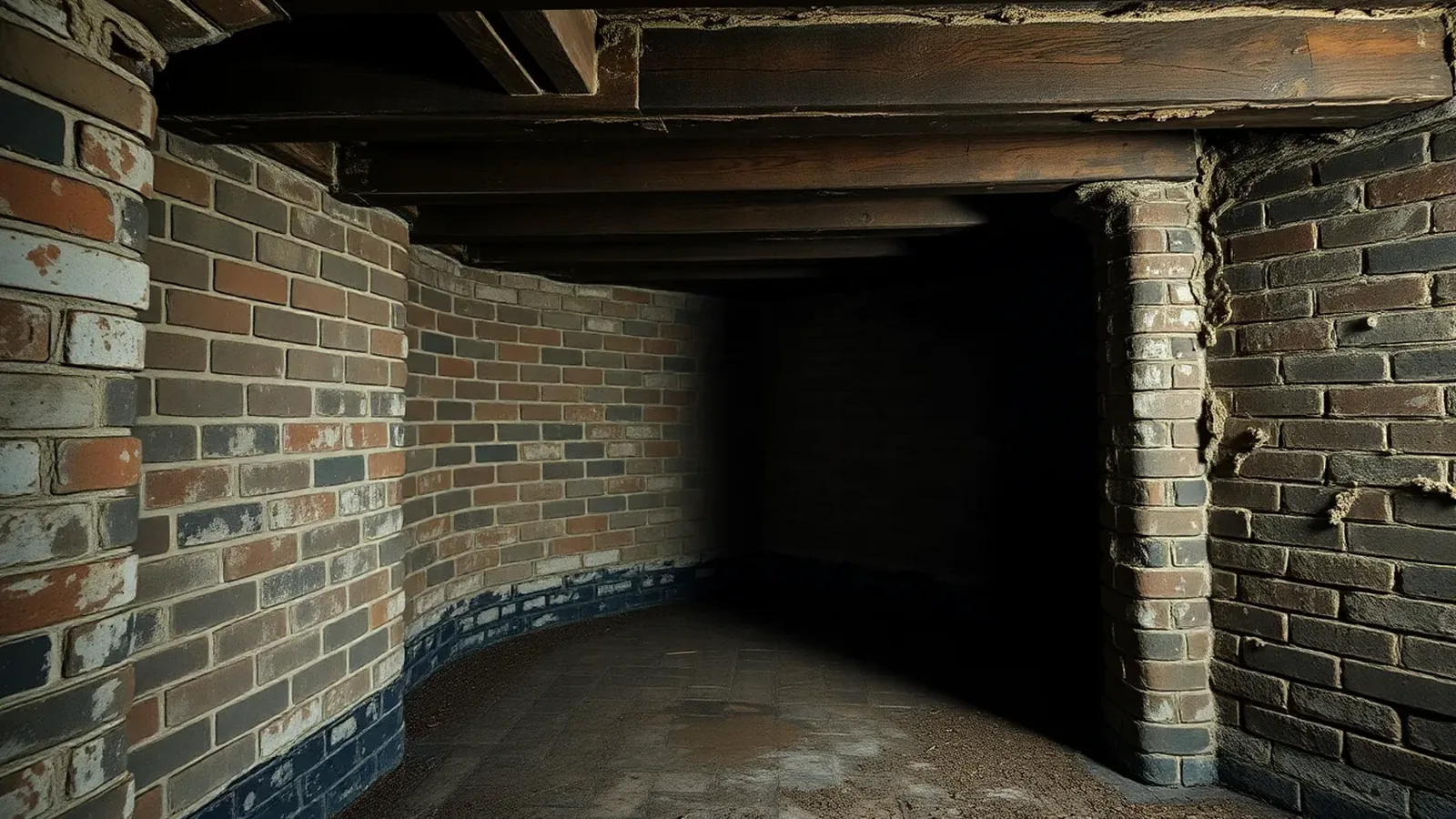
This is why an active woodworm problem and a damp problem so often appear in the same place: cellars, the ends of floor joists bedded into damp walls, bathrooms, and the bottoms of door and window frames. Treating one without the other rarely lasts. If we kill the beetle but leave the timber wet, you are left with the conditions for rot — and for re-infestation once new beetles arrive.
The clearest early warning is the wood-boring weevil. Unlike the common furniture beetle, the weevil only attacks timber that is already damp and decaying. Spot its ragged, 1mm holes and you have found proof of a moisture problem hiding behind the skirting or under the floor.
Timber moisture, in plain numbers
- Below 18%
- Sound timber — low risk
- 20–28%
- Beetle and wet rot can start
- Above 28%
- Dry rot can establish and spread
A surveyor measures these readings on site with a moisture meter, so treatment targets the real cause rather than the symptom.
Know the difference
Dry rot and wet rot are not the same problem
They look similar to a worried homeowner, but they behave very differently — and that changes how much work is needed.
Dry rot
Serpula lacrymans
The most serious wood-rotting fungus in UK buildings. It produces fine grey strands that can travel several metres through plaster and even brickwork to reach dry timber, so it spreads far beyond the first wet patch. Affected wood turns brown, cracks into cube-shaped pieces and crumbles in the hand. You may see a soft white sheet of growth or a rust-coloured fruiting body. Because it moves so far, dry rot needs the widest and most careful treatment.
Wet rot
Coniophora puteana and others
A group of fungi that decay timber where it is persistently wet — usually around leaks, failed seals and condensation. Wet rot stays put: it does not march across masonry the way dry rot does, and it stops growing once the timber dries out. The wood feels spongy and darkens, sometimes with thin dark strands across the surface. Far more common than dry rot, and usually fixed by stopping the water and replacing the softened wood.
Correct identification matters because the two need very different responses. Treating a dry rot outbreak as if it were wet rot can leave hidden growth to spread behind walls. A qualified surveyor settles it on site. Guidance on diagnosing and managing decay in older and listed buildings is published by Historic England, and treatment standards by the Property Care Association.
How we treat it
Diagnose the damp, treat the decay, stop it returning
A logical order that deals with the cause first, so the cure holds.
Find the moisture
A surveyor takes moisture-meter readings, lifts boards and traces the source — a failed gutter, leaking pipe, bridged damp-proof course or poor sub-floor ventilation.
Stop the water
We fix the cause and dry the structure — repairs, improved ventilation and, where needed, a new damp-proof course. Wet timber will never be sound until this is done.
Remove & treat
Timber that has lost strength is cut out and replaced. Sound surrounding timber, and any masonry a dry rot strand has crossed, is treated with fungicide to halt growth.
Treat the beetle
With the timber drying, any active woodworm is treated with a water-based permethrin spray or boron paste, and the whole job is covered by a written guarantee.
Every fungicide and insecticide we use is approved for the purpose and applied to label by trained technicians. You can read how timber-treatment products are regulated and assessed for safety at HSE — biocides & pesticide safety.
Lasting results
Fix the damp and the woodworm stays gone
Insecticide alone treats today's beetle. Dry timber treats the next ten years.
A guarantee is only as good as the conditions it is given in. If we sprayed your joists but the gutter kept leaking, fresh beetles would find soft, damp timber again and a fungus could quietly start. That is why we will not treat woodworm in isolation when there is an obvious moisture problem — it would be selling you a result we know will not hold.
Bring the timber back below 18 per cent moisture and keep it there, and the wood stops being an easy target. Beetle larvae develop poorly in dry timber, dry rot cannot establish, and wet rot cannot grow. This is the single most reliable way to make sure woodworm does not return after treatment — and it is why our woodworm treatment and damp work go hand in hand.
Worried you might have a problem? A free woodworm and damp survey measures the moisture, identifies any rot or beetle, and gives you a clear, fixed written quote with no obligation. If the timber is sound and the holes are old, we will tell you that too.
Related help and guidance
Woodworm Treatment
Our complete, guaranteed treatment for active wood-boring beetle in homes and commercial property.
Learn more →Woodworm & Damp Survey
A qualified surveyor measures the moisture, identifies the species and gives you a fixed written quote.
Learn more →Wood-Boring Weevil
The damp-indicator beetle. Find it and you have found an underlying moisture problem.
Learn more →Frequently asked questions
What is the difference between dry rot and wet rot?
Does damp cause woodworm?
Will treating woodworm stop it coming back if the timber stays damp?
How do you treat dry rot?
Get rid of woodworm — for good
Book a free survey today. Fixed written quote, BPCA-trained technicians and a 30-year guarantee on treated timber.
Request your free survey
Two details to get started.