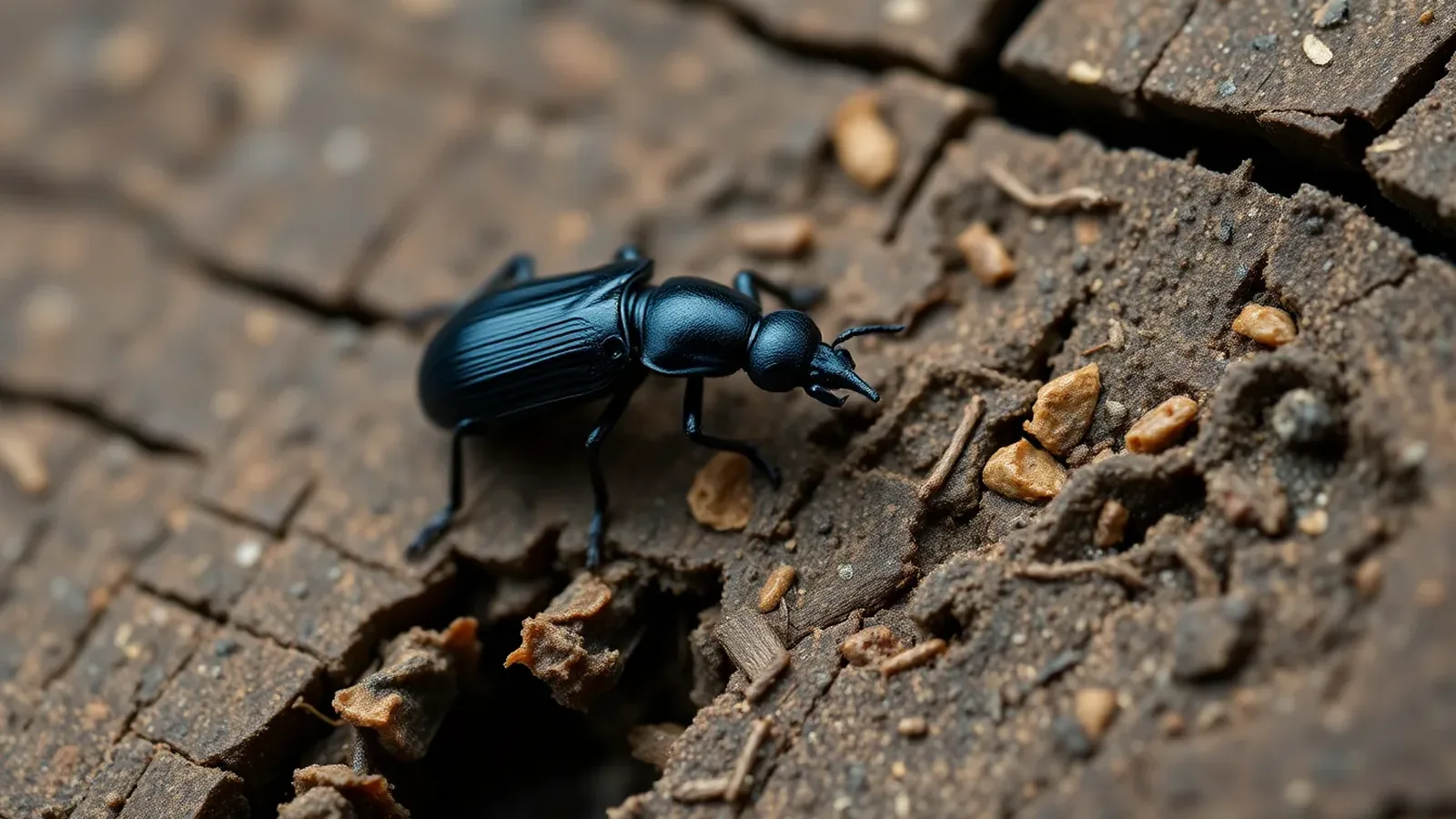
Wood-Boring Weevil
A small weevil that follows damp. If you find it, look for the leak first.
- It attacks wood that is damp and decaying
- Holes look ragged and small
- Fixing damp is the key step
What to know about the wood-boring weevil
Wood-boring weevils feed on timber that is already damp and decaying. They are a secondary pest, which means they follow rot rather than start the problem. Finding them tells you that something is wet.
The weevils prefer cellars, ground floors and bathroom areas. Because they need soft wood, they rarely bother dry timber. For that reason, the first job is to find and fix the water source.
| At a glance | |
|---|---|
| Type | Weevil with a short snout |
| Adult size | About 3 to 5mm |
| Exit holes | Small and ragged |
| Timber | Damp, decayed wood |
| Active season | Year round in damp places |
How to recognise it
You will usually see the damage before you see the beetle. Four clues give it away, because each one leaves a mark.
The adult weevil
It is small and dark, with a short snout. You may see it in damp cellars or under floors.
The holes
Holes are small and look ragged. They sit in soft, damp wood.
Bore dust (frass)
The dust is made of tiny pellets. It collects near the holes and in tunnels.
Soft, wet timber
The wood feels spongy and may smell musty. Rot is often present.
How the beetle develops
The weevil breeds in damp wood, so the cycle depends on moisture. When the wood dries, the colony usually dies out.
Dry the wood and the colony usually fades. Treating the weevil without curing the damp rarely works.
- 1
Egg
The female lays eggs in soft, damp timber. She avoids dry wood, because the larvae need moisture.
- 2
Larva
The pale grub tunnels through decayed wood. It feeds on the softened fibres.
- 3
Pupa
The larva pupates inside the timber. This stage is short.
- 4
Adult
The adult emerges and may move to other damp wood. Therefore a leak can feed new colonies.
Where it lives and what it does
Knowing its favourite places helps you check the right spots, since each beetle has habits.
Where it is found
Look in cellars, under ground floors and near leaks. Bath panels and window sills can also be damp.
The damage it does
It speeds up the loss of wood that is already weak from rot. Damage often goes together with decay.
How worried to be
Low as a pest, but a clear warning of damp. Take it seriously because rot can follow.
How the wood-boring weevil is treated
The method depends on the beetle, because each species needs a different approach.
Fix the water source first, then dry the area and improve ventilation. A surveyor may replace rotten timber and treat sound wood with boron paste or another preservative.
If rot is present, read our guide to dry rot and damp treatment, because both problems need the same first step.
Help in your area
This applies across the UK, but housing differs by city. For local detail, read about woodworm treatment in London and woodworm treatment in Manchester, because older streets hold more old timber.
Wood-Boring Weevil: your questions
Is the wood-boring weevil the same as woodworm?
It is another wood-boring insect, but it targets damp, decayed timber. See the species guide for the differences.
How do I get rid of it?
Fix the damp, dry the wood and replace rotten sections. Without that, new weevils will return.
Does it spread to dry wood?
It rarely attacks dry, sound timber. It follows moisture.
Should I call a specialist?
Yes if rot is present or the timber is structural. A survey checks for both pests.
Helpful next steps
Found signs of the wood-boring weevil?
Send your postcode and what you have seen, because the right treatment depends on the species. A local specialist will call to arrange a survey.