Signs of Woodworm: How to Spot an Active Infestation
Learn the seven signs of woodworm, from exit holes and bore dust to weak timber and beetles, and how to tell an active infestation from an old, dead one.
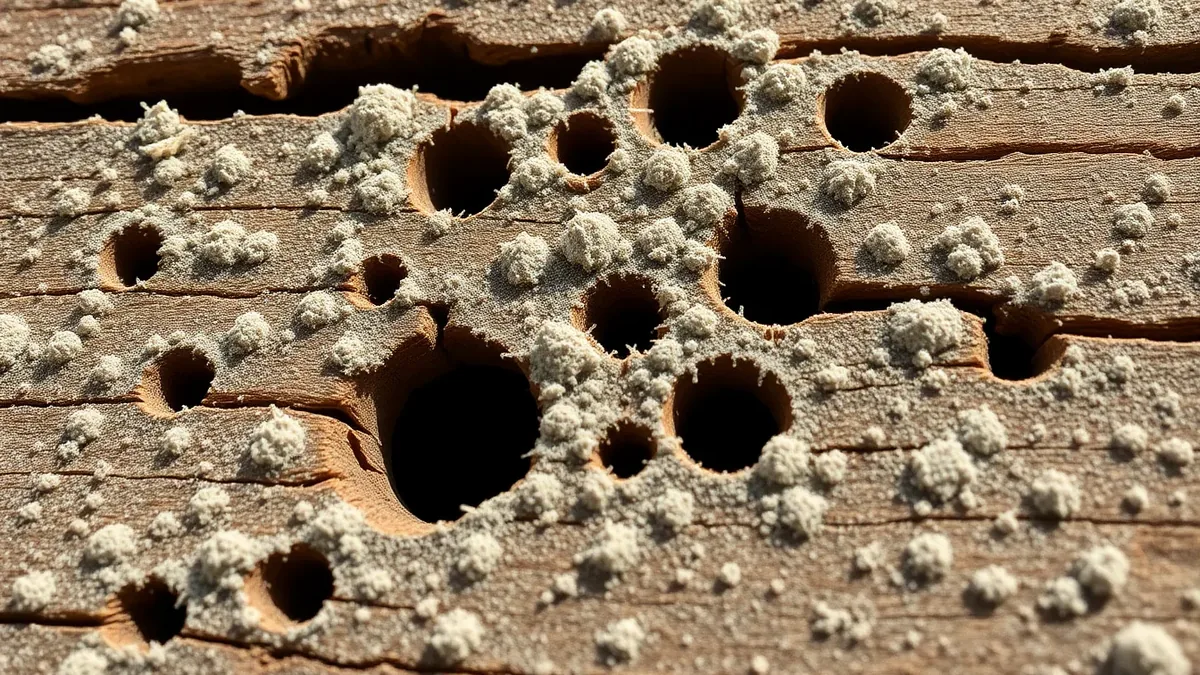
Woodworm rarely announces itself. The grubs feed inside the wood for years, so you often see nothing until the beetles leave. Knowing the signs helps you act early, because early action costs less.
This guide lists the main signs and what each one tells you. It also shows the simple checks that separate a live problem from an old one.
What woodworm is
“Woodworm” is not a worm. It is the larva of a wood-boring beetle. The eggs hatch in bare timber, the grubs tunnel for years, and the adults then chew their way out.
The beetle you are most likely to meet is the common furniture beetle. It leaves round holes about 1 to 2mm wide. Rarer species, such as the death watch beetle, leave bigger holes.
The seven signs
1. Exit holes
Small round holes are the classic sign. For furniture beetle they are about the size of a pin head, with clean edges. You can find them in floorboards, joists, skirting, roof timbers and old furniture.
2. Bore dust (frass)
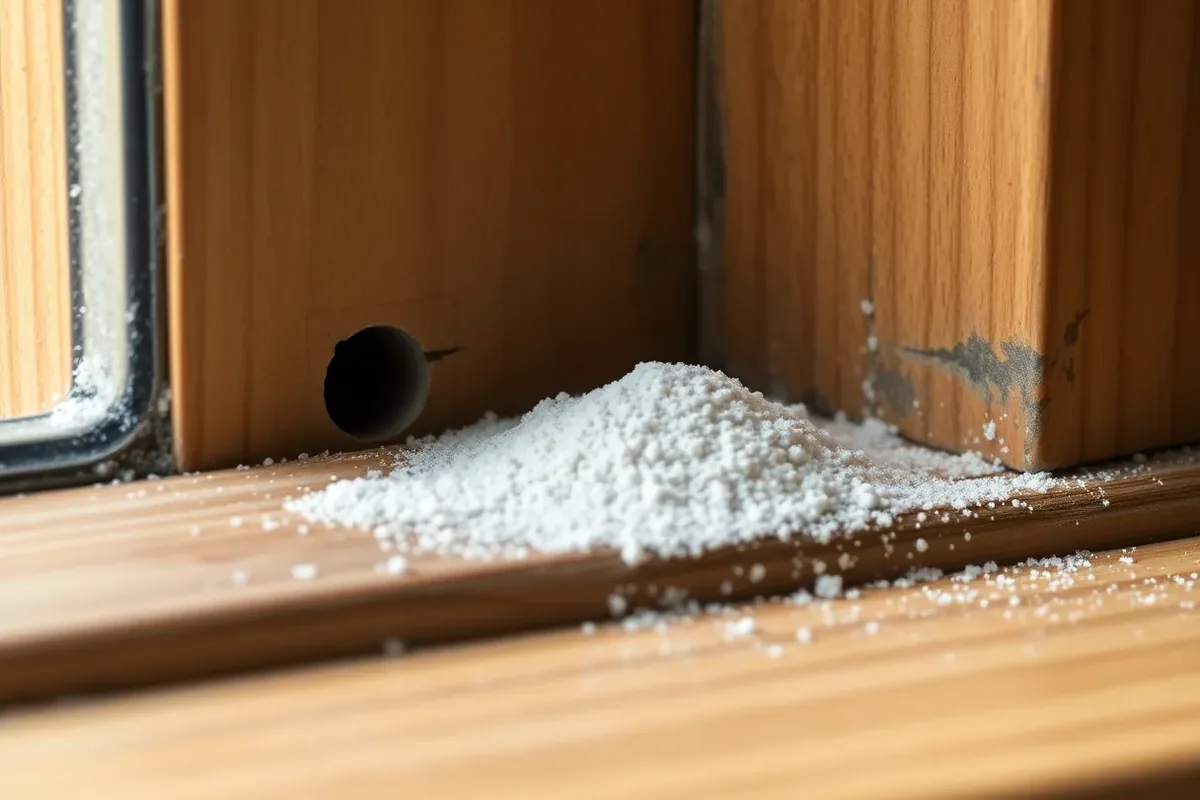
Frass is the fine, gritty powder the larvae push out. It looks like pale sawdust and gathers in small heaps under the holes. Fresh dust is the best single clue to a live problem, because it only appears when larvae are working.
3. Tunnels
Under the surface the larvae carve a web of tunnels. You see them only where wood has split or been cut. Many tunnels mean the beetle has been busy for a long time.
4. Weak or crumbling wood
As the tunnels multiply, the timber loses strength. Watch for these warning signs:
- Edges of joists or boards that crumble
- A screwdriver that sinks into wood that should be firm
- Floors that bounce or feel springy
- Sagging joists or rafters
Weakness like this turns woodworm from a nuisance into a safety matter. For that reason, call a surveyor rather than trying to fix it alone.
5. Live beetles
Adults emerge mainly from late spring to late summer. They are small, brown and slightly hunched. You may spot them on windowsills, because they head for the light.
6. Dead beetles
Dead beetles gather on sills, in light fittings and in cobwebs. A cluster of fresh ones suggests a new generation has just emerged.
7. Rough, bored edges
Females lay eggs in cracks and rough end grain. Crevices full of fresh dust on bare timber point to recent egg laying. You rarely see the eggs themselves.
Where to look first
Beetles like timber that is cool, still and slightly damp. Check these places first:
- Suspended floors, by lifting a board near an outside wall
- Roof spaces, especially where rafters meet the walls
- Cellars and sub-floor voids
- Stairs and the backs of skirting boards
- Old furniture, picture frames and second-hand timber
Older homes with original softwood joists carry the most risk. Homes with a history of damp are at risk too, since damp timber is easier for larvae to eat.
Active or historic?
Many homes carry old holes from a beetle that died out long ago. Treating dead damage wastes money, so check before you buy anything.
Signs of an active problem:
- Fresh, pale dust that returns after cleaning
- Clean, light-coloured holes
- Live or freshly dead beetles in season
- Timber that is damp or was recently damp
Signs of an old problem:
- Dull, darkened holes, sometimes painted over
- Grey, caked dust that does not return
- Dry, stable timber with no beetles
A simple test helps. Vacuum the dust, mark a few holes with a pencil, and look again after a few weeks in summer. New holes or new dust prove the beetle is active. Our guide to active versus historic woodworm explains the test in more detail.
What to do next
If your checks point to a live problem, work through four steps. Name the beetle if you can, because it affects the method. Judge how far the damage goes, and look for damp. Then decide whether to treat the wood yourself or call a specialist. Our guide on how to treat woodworm covers each option, and the treatment methods page compares them.
Still unsure? A survey gives a firm answer before you spend money on chemicals. You can request a survey at any time.
Homes differ by city, so local advice helps. Our pages on woodworm treatment in Manchester and woodworm treatment in Birmingham explain the usual problems.
To go deeper, read about the common furniture beetle and the spray treatment, because the right method depends on the beetle.