Identification
Is Woodworm Dangerous? Risks to Your Home & Health
How dangerous woodworm really is — the structural risk to your home, whether it spreads, health and pet safety, and when you need to act fast.
By The WoodwormTreatmentHQ Team · Updated 12 May 2026
Finding small round holes in your floorboards or roof timbers is unsettling, and the first question is usually the most important one: is this actually dangerous, or am I worrying about nothing? The honest answer sits in the middle. Woodworm is not a fire hazard, it will not poison you, and a lot of the damage people find is old and harmless. But active woodworm in structural timber is a genuine risk that gets worse the longer it is left — and there are situations where you should act quickly rather than wait.
This guide explains the real risks: what woodworm does to your home, whether it spreads, what it means for your family and pets, and how to tell an urgent case from one you can deal with calmly.
The main risk: structural damage to your home
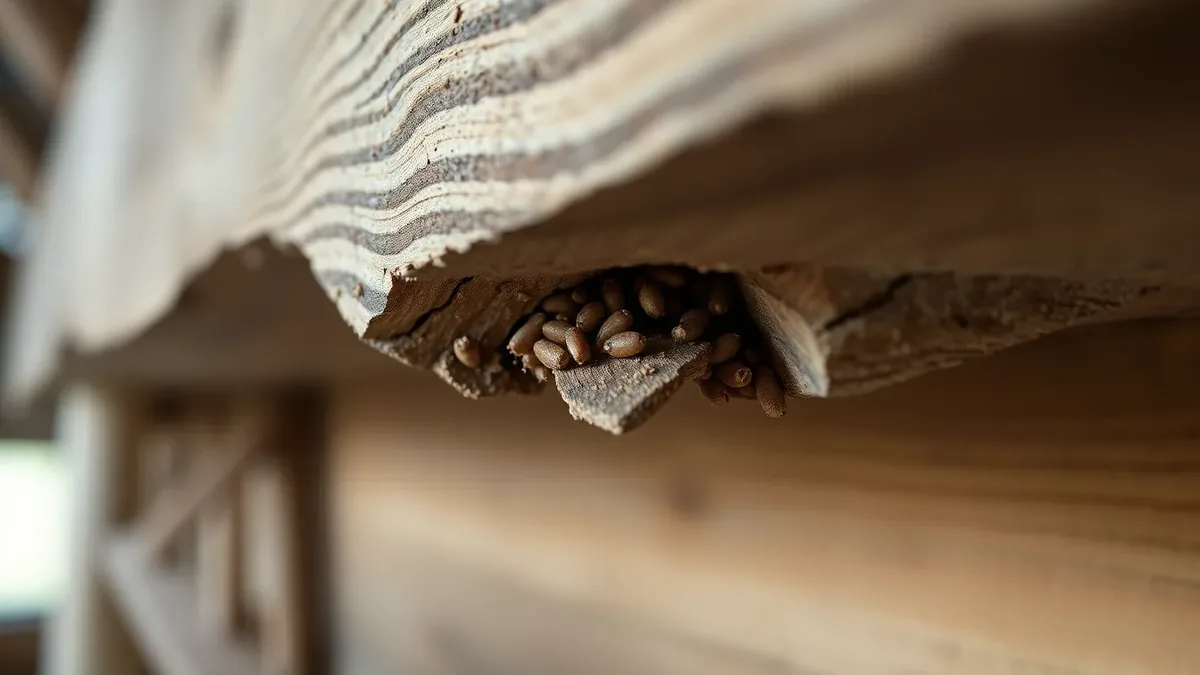
The serious danger from woodworm is structural, not medical. Wood-boring beetle larvae spend years tunnelling through timber, eating it from the inside. The surface can look almost normal while the wood beneath is being hollowed into a network of channels. Over time that timber loses strength.
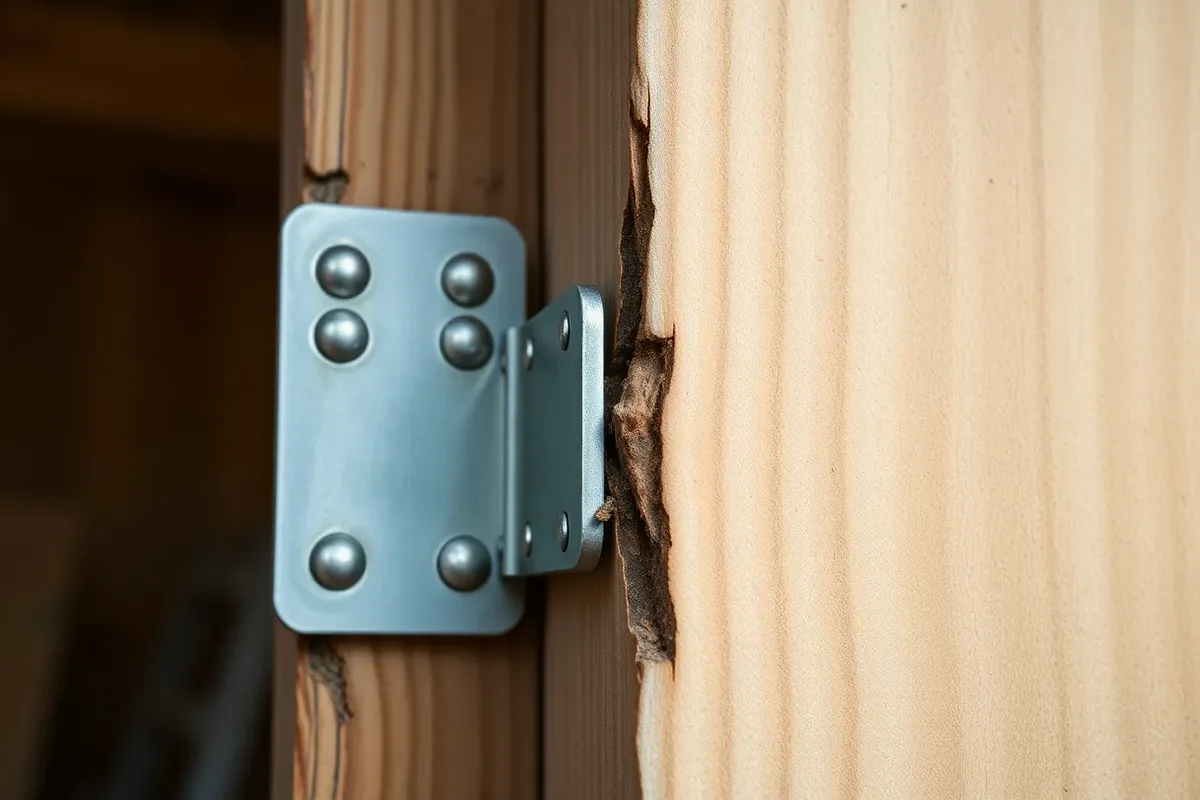
When the affected wood is doing a structural job — floor joists, roof rafters, lintels, staircase strings, beams — that loss of strength matters. Badly weakened joists can flex, sag or, in severe and neglected cases, fail under load. This is the scenario worth taking seriously: not the cosmetic holes, but the quiet weakening of timber that holds your home up.
How fast this happens depends heavily on the species:
- Common furniture beetle (Anobium punctatum) causes about three quarters of UK cases. It leaves crisp 1–2mm holes and works slowly. Caught reasonably early, it rarely threatens structure — but over many years and across many timbers it certainly can.
- Death watch beetle (Xestobium rufovillosum) is the one to respect. It attacks old hardwood, especially oak in historic and listed buildings, leaving larger 3mm holes. It is slow but persistent, often deep in big structural members, and is structurally serious. If you suspect it, treat it as a priority — our guide to the death watch beetle explains why this species needs specialist attention.
- House longhorn beetle (Hylotrupes bajulus) is rare but devastating, with large 6–10mm oval holes in softwood. It is significant enough that building regulations name it in certain areas.
Where damage has already gone structural, treating the beetle is only half the job — the weakened timber itself may need attention. That can mean splicing, resin repair or replacing the affected sections, which is the realm of structural timber repair and replacement. A survey decides whether you have a treat-only situation or a treat-and-repair one.
Does woodworm spread?
Yes — and this is why a “wait and see” approach can backfire. An active infestation does not stay politely in one floorboard. Adult beetles emerge, fly short distances and lay eggs on other suitable timber, and the larvae bore on through whatever wood they are in. Left alone, an infestation in one joist can extend along the floor, into skirtings, up into the roof, and into furniture in the same room.
Three things make spread more likely and faster:
- Damp. Beetles strongly favour timber with raised moisture content. A damp sub-floor, a leaking roof or poor ventilation turns a slow problem into an expanding one. Damp is the single biggest accelerant.
- Plenty of suitable timber. Older homes with lots of original softwood — joists, rafters, boards — give an infestation room to grow.
- Time. Each generation that emerges and re-lays widens the affected area. The longer it runs, the more timber is involved and the bigger the eventual job.
Because it spreads, woodworm is one of those problems where acting early is genuinely cheaper and easier than waiting. Spotting it in time is half the battle — our guide to the signs of woodworm walks through exit holes, frass, tunnels and live beetles so you can catch it before it travels.

Is woodworm dangerous to your health or pets?
This is where you can relax a little. Woodworm itself poses very little direct risk to human or animal health.
- The beetles do not bite or sting, they do not infest people or pets, and they do not spread disease. Adult wood-boring beetles are harmless to handle.
- The frass (bore dust) is essentially fine wood powder. It is not toxic. As with any fine dust, someone with asthma or a dust sensitivity might find a large quantity irritating to breathe, so it is sensible to wear a simple dust mask when clearing out a heavily affected, dusty loft — but this is ordinary dust caution, not a special hazard.
- There is an indirect health angle worth knowing. Woodworm thrives in damp timber, and the same persistent damp that feeds the beetle can also support wood-rotting fungi and mould. Damp and mould are the genuine indoor-air concern here. So while the woodworm is not the health risk, the conditions it signals can be — another reason to fix the underlying moisture, not just the beetle.
What about the treatment chemicals? Modern professional woodworm treatments are water-based and applied at controlled, approved concentrations. Once treated timber is touch-dry — usually within a few hours — and the area has ventilated, it is safe for normal household use. We do ask people and pets to stay out of a room during application and while it dries, purely as a sensible precaution. Professional products are approved for this use, and the HSE biocides and pesticide safety pages set out how timber treatments are regulated in the UK. If you would prefer to minimise chemicals altogether, low-toxicity options exist and we cover them honestly in our guide to natural woodworm treatment.
When to act fast
Not every case is urgent. Plenty of the holes people find are old, grey and inactive — the harmless scars of an infestation that died out long ago, often before they even owned the house. Old damage needs no treatment at all. The skill is telling live from dead, which our guide to active vs historic woodworm explains in detail.
Treat it as a priority and arrange a professional survey promptly if you see any of these:
- Fresh, pale frass that looks like clean new sawdust, especially if it reappears after you clear it away. Fresh frass is the clearest sign of current activity.
- Crisp, sharp-edged exit holes with pale, clean interiors — recent emergence, as opposed to old dark holes.
- Live beetles indoors in spring or summer, or fresh dead ones on sills below timber.
- Timber that feels soft, springs underfoot, or crumbles at the edges — a sign damage may already be structural.
- Larger holes (3mm or above), particularly in old oak (possible death watch beetle) or in softwood (possible house longhorn) — both warrant specialist assessment quickly.
- Damp present with any of the above — the combination spreads fastest.
- Woodworm found during a house sale or purchase, where a mortgage surveyor will usually want it investigated and a treatment certificate provided.
If you are not seeing fresh frass, live beetles or weakened wood, you can almost certainly take your time — confirm whether it is active first, and don’t panic-spray old, dormant holes.
The bottom line
Woodworm is dangerous in one specific way: active infestation steadily weakens structural timber and spreads to nearby wood, and left long enough that becomes a real structural and safety risk. It is not a danger to your health, it does not bite or poison, and a large share of the damage people find is old and harmless. The sensible approach is to confirm whether it is active, act promptly if it is — especially with damp, large holes or weakened timber — and not lose sleep over grey, dormant holes that stopped years ago.
Get professional help
Not sure whether your woodworm is an active threat or an old scar? Get a free quote and a qualified surveyor will assess the timber, confirm whether it is active, identify the species, and tell you honestly whether it needs treatment, structural repair, or nothing at all.