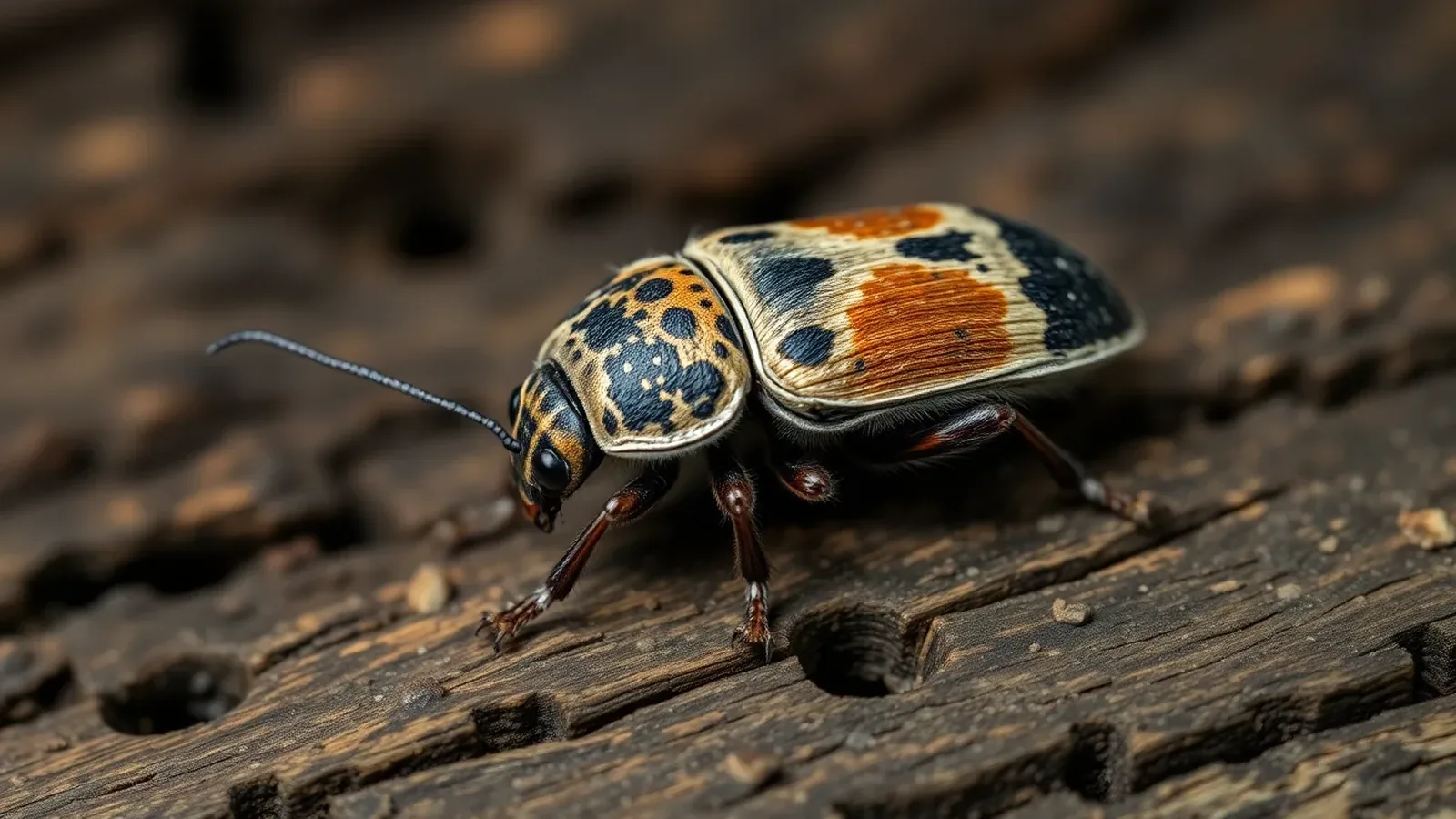
Death Watch Beetle
A slow beetle of old oak and historic buildings. It is rare in modern homes, but it can do serious harm.
- Holes are about 2 to 3mm wide and round
- It favours old oak that is already damp
- Historic buildings need specialist advice
What to know about the death watch beetle
The death watch beetle is best known from churches, barns and other old buildings with oak frames. It tends to attack hardwood that has been softened by damp or fungus. As a result, it is far less common in ordinary modern houses.
The name comes from the tapping sound adults make in spring. They knock their heads on the wood to call a mate. Because the larvae can take many years to grow, damage can build up for a long time before anyone notices.
| At a glance | |
|---|---|
| Latin name | Xestobium rufovillosum |
| Adult size | About 5 to 9mm |
| Exit holes | Round, about 2 to 3mm |
| Timber | Oak and other damp hardwoods |
| Active season | Spring and early summer |
How to recognise it
You will usually see the damage before you see the beetle. Four clues give it away, because each one leaves a mark.
The adult beetle
It is brown and mottled with pale patches. It is larger than the furniture beetle, so it is easier to see.
The exit holes
Holes are round and about 2 to 3mm wide. They appear mostly in hardwood, especially old oak.
Bore dust (frass)
The dust is coarse and gritty. Under a lens it shows flattened, bun-shaped pellets.
The tapping sound
In a quiet building in spring, you may hear soft, regular ticking. It is the mating call, and it is a strong clue.
How the beetle develops
This beetle grows slowly. A larva can feed for several years, and in cool buildings it can take far longer.
Because the cycle is so long, an old infestation can still be active. Only a specialist can judge this reliably, so do not rely on holes alone.
- 1
Egg
The female lays eggs in cracks and old holes in damp oak. They hatch within weeks.
- 2
Larva
The grub tunnels through the timber for years. This stage causes almost all the damage.
- 3
Pupa
The larva pupates in a chamber just under the surface in late summer.
- 4
Adult
The adult stays inside for a while, then emerges in spring. It taps, mates and lays eggs.
Where it lives and what it does
Knowing its favourite places helps you check the right spots, since each beetle has habits.
Where it is found
Look in old oak beams, roof trusses, floor joists and wall plates. Damp ends set into masonry are favourite spots.
The damage it does
Larvae hollow out the timber from within, so a beam can look sound while its core is weak. Damage often goes together with decay.
How worried to be
High in older buildings. Get a survey from a specialist who knows historic timber, because repair choices matter.
How the death watch beetle is treated
The method depends on the beetle, because each species needs a different approach.
Treatment usually combines drying out the building with targeted boron treatment or other insecticide. A surveyor will decide how much timber needs treating and where repairs are needed. Structural beams may need timber repair as well.
In a listed or historic building, work may need consent. Speak to the local conservation officer early, and ask the specialist to explain how they protect historic fabric.
Help in your area
This applies across the UK, but housing differs by city. For local detail, read about woodworm treatment in London and woodworm treatment in Manchester, because older streets hold more old timber.
Death Watch Beetle: your questions
Is the death watch beetle common in homes?
No. It is much more common in historic buildings with oak. Most homes with woodworm have the common furniture beetle instead.
Can I hear the death watch beetle?
Yes, in spring you may hear faint ticking in a quiet room. The beetle taps to attract a mate. Hearing it is a clue, but a survey should confirm the species.
Does damp cause death watch beetle?
Damp does not create the beetle, but it softens oak and makes it easier to eat. Fixing leaks and ventilating the building is part of any plan.
Who should treat it?
Choose a specialist with experience of historic timber. Ask for a written scope, and read what a survey covers before you agree.
Helpful next steps
Found signs of the death watch beetle?
Send your postcode and what you have seen, because the right treatment depends on the species. A local specialist will call to arrange a survey.