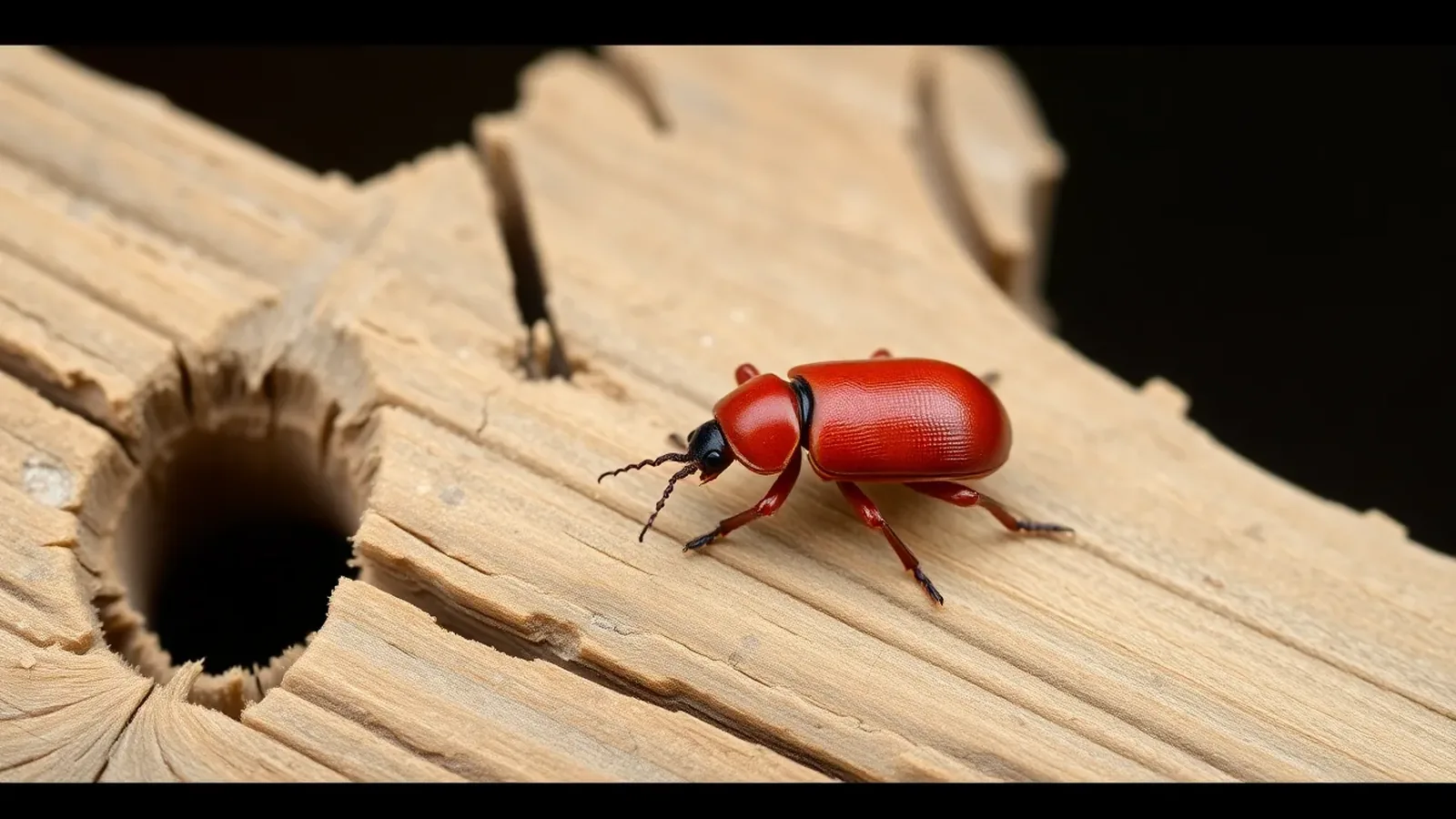
Common Furniture Beetle
The usual cause of woodworm in UK homes. It is small and treatable, but it should never be ignored.
- Look for crisp round holes about 1 to 2mm wide
- The larvae do the damage, and they feed for years
- Spray treatment usually finishes in a day
The woodworm you are most likely to find
If you have found small round holes in a floorboard, a joist or an old chest of drawers, this beetle is the likely cause. It is so common that many people use "woodworm" and "furniture beetle" to mean the same thing. It is the most widespread wood-boring beetle in UK homes.
It is also one of the easier species to deal with. It attacks the sapwood rather than dense heartwood, and it works slowly. However, you should confirm that the beetle is active before you pay for treatment, because many old holes are harmless.
| At a glance | |
|---|---|
| Latin name | Anobium punctatum |
| Adult size | About 3 to 5mm |
| Exit holes | Round, about 1 to 2mm |
| Timber | Softwood and hardwood sapwood |
| Flight season | Late spring to late summer |
How to recognise it
You will usually see the damage before you see the beetle. Four clues give it away, because each one leaves a mark.
The adult beetle
It is small and reddish-brown to dark brown. The thorax hides the head when you look from above, and the wing cases carry neat rows of tiny pits. You may see it near windows on warm days.
The exit holes
Fresh holes are crisp, round and about the size of a pin head. Pale edges suggest recent activity, while dark, dusty edges often mean the hole is old.
Bore dust (frass)
Fine, gritty powder collects under the holes on floors and sills. Under a lens it shows tiny lemon-shaped pellets. Fresh dust that returns after cleaning is a strong sign of activity.
Tunnels and weak wood
Larvae leave a web of tunnels packed with dust under the surface. In bad cases the timber feels light, crumbles at the edges or flexes underfoot.
How the beetle develops
The beetle spends most of its life as a larva inside the wood. That is why an infestation can run quietly for years before the first hole appears.
New adults emerge each year and lay eggs back in the same timber, so an untreated infestation rolls on. The flight season is the best time to confirm activity, although treatment can happen at any time of year.
- 1
Egg
In late spring and summer the female lays eggs in cracks, joints and old exit holes in bare timber. They hatch after a few weeks.
- 2
Larva
The creamy, curved grub tunnels through the wood for several years. This is the stage that does the damage.
- 3
Pupa
When fully grown, the larva pupates in a chamber just under the surface. A few weeks later it becomes an adult.
- 4
Adult
The adult chews out through the surface and leaves a fresh hole. It lives only a few weeks, but it mates and lays eggs in that time.
Where it lives and what it does
Knowing its favourite places helps you check the right spots, since each beetle has habits.
Where it is found
It favours cool, slightly damp and badly ventilated timber. Look under suspended floors, in roof spaces, on staircases and on the backs of old furniture.
The damage it does
A colony can riddle the sapwood with tunnels while the surface looks almost normal. In long-running cases in damp areas, joist ends and boards can lose real strength.
How worried to be
Moderate. The beetle is slow and treatable, and most homes are safe once it is dealt with. It becomes serious when left for many years, or when damp keeps feeding it.
How the common furniture beetle is treated
The method depends on the beetle, because each species needs a different approach.
Professionals usually apply a water-based insecticidal spray to all affected and at-risk timber. The product kills emerging adults and protects the surface for a time. Where timber is thick or hard to reach, a surveyor may add boron paste as well.
Treatment works best when you also fix the damp that attracted the beetle. Otherwise new damp timber can invite a fresh attack. Our guide to how long treatment lasts explains what to expect.
Help in your area
This applies across the UK, but housing differs by city. For local detail, read about woodworm treatment in London and woodworm treatment in Manchester, because older streets hold more old timber.
Common Furniture Beetle: your questions
How do I know it is the common furniture beetle?
Check the holes and the dust. This beetle leaves crisp round holes of 1 to 2mm and gritty dust like fine sand. Holes of about 2 to 3mm point to the death watch beetle, and large oval holes to the house longhorn. Our signs of woodworm guide helps with the rest.
Is the common furniture beetle dangerous to my house?
Usually it is a manageable problem, not an emergency. Over years it can weaken joists, floorboards and roof timbers, so it should not be ignored. Read is woodworm dangerous? for the detail.
How is it treated?
Most jobs use a water-based spray on all affected timber. A surveyor may add boron paste for thick or hidden wood. See treatment methods for each option.
Will it come back after treatment?
It can return where new, untreated and damp timber gives it a place to lay eggs. Control damp and keep floor and roof voids ventilated. Ask any firm what their written quote says about re-treatment.
Helpful next steps
Found signs of the common furniture beetle?
Send your postcode and what you have seen, because the right treatment depends on the species. A local specialist will call to arrange a survey.