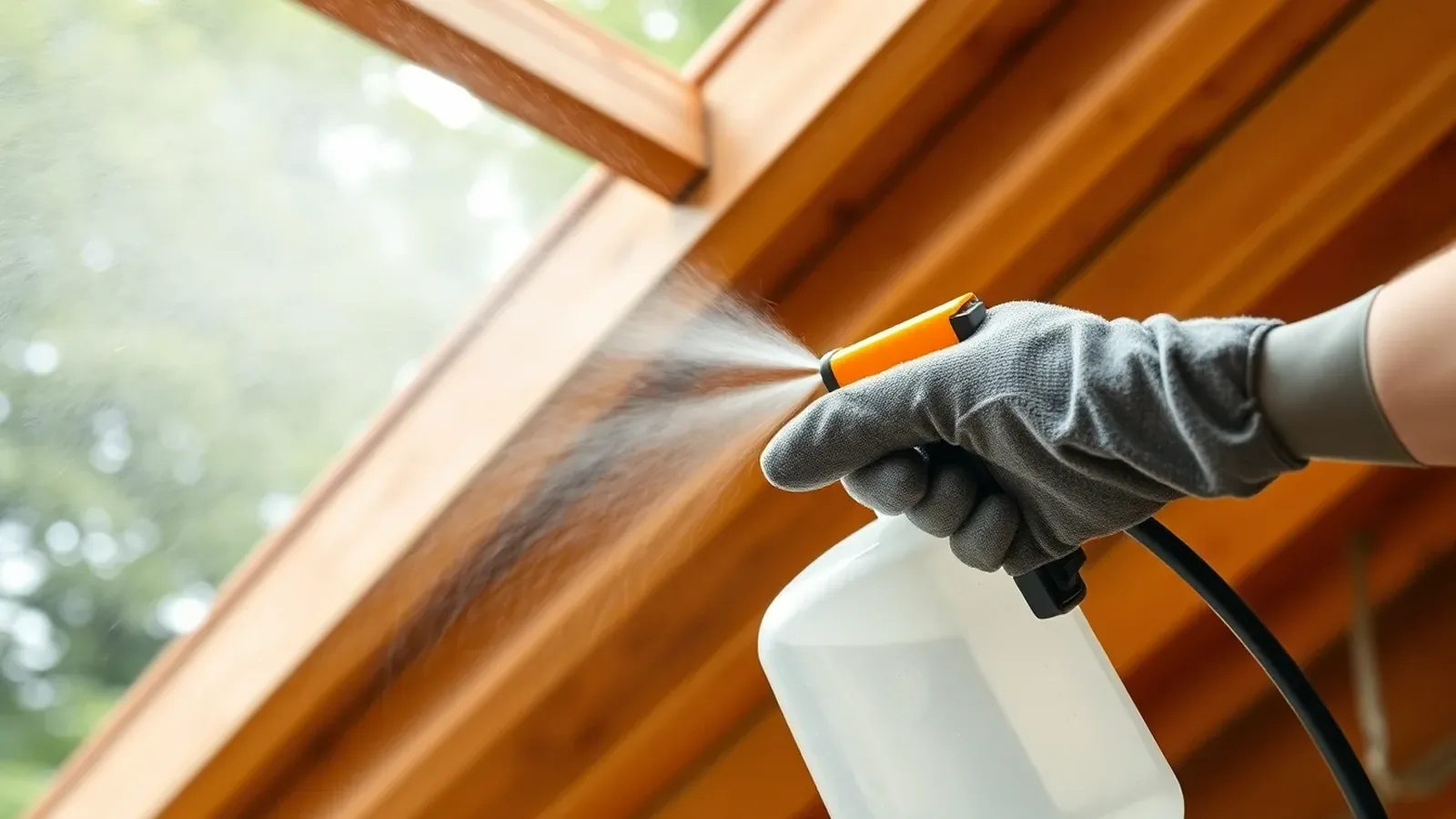
Insecticidal Spray Treatment
A water-based spray is the usual treatment for active furniture beetle in timber you can reach.
- Low-odour, water-based formulas are common
- Most spray jobs finish in a day
- Best for open joists, rafters and floorboards
What spray treatment does
Spray is the method most people picture when they think of woodworm treatment. It suits the most common case, which is active furniture beetle in sound softwood that a technician can reach. The product soaks the surface and the layers just below it.
However, spray is not the answer to every problem. It works near the surface, so thick or buried timber may need boron paste as well. A survey decides which method fits.
How a spray treatment runs
A typical job follows three steps, although a surveyor will adapt them to your building.
- 1
Prepare the timber
The team clears stored items and loose debris so the spray reaches bare wood. Boxed-in timber is opened where this is practical.
- 2
Apply the spray
A low-pressure spray covers all reachable timber. The team works the product into joints, end grain and badly hit sections.
- 3
Dry and ventilate
The wood needs time to dry, and the room needs fresh air. Follow the written re-entry advice from the specialist.
What to weigh up
Every method has trade-offs. Weigh them against your own timber, because no method suits every case.
Fast
Most spray jobs take a day, because the product dries quickly. Larger lofts can take longer.
Low disruption
Water-based products have little smell. You can usually stay in the house, although you may need to leave the treated room.
Surface protection
The product stays in the outer wood, so emerging beetles meet it. That limits new holes while the product remains active.
Limits to know
Spray does not reach deep into thick timber. Permethrin is also toxic to cats and fish until it dries, so keep them out and cover tanks.
When this method is the right choice
Use this list to check the fit. A mismatch wastes money, since each method has limits.
- Active furniture beetle in open floor joists, rafters or floorboard undersides
- Timber that is sound and reachable, not boxed in or buried
- Homes where a quick, low-odour treatment matters
Help in your area
This applies across the UK, but housing differs by city. For local detail, read about woodworm treatment in London and woodworm treatment in Manchester, because older streets hold more old timber.
Spray Treatment: your questions
What is in woodworm spray?
Professional sprays often use permethrin, a pyrethroid insecticide, in a water-based mix. The label lists the exact product. For pesticide guidance, see the HSE biocides pages.
Is the spray safe for children and pets?
Follow the product label and the specialist's written instructions. Keep children and pets out of the treated area until it is dry and ventilated. Permethrin is toxic to cats and fish, so take extra care with them.
How deep does it go?
It treats the surface and the layers just beneath. For thick or structural timber, a surveyor may choose boron paste instead.
When is spray the right choice?
It suits active furniture beetle in sound, open softwood. Other species or damaged timber may need another method. Request a survey to be sure.
Helpful next steps
Not sure which method you need?
Request a survey, because the right method depends on the beetle and the timber. A local specialist will call you to arrange a visit.