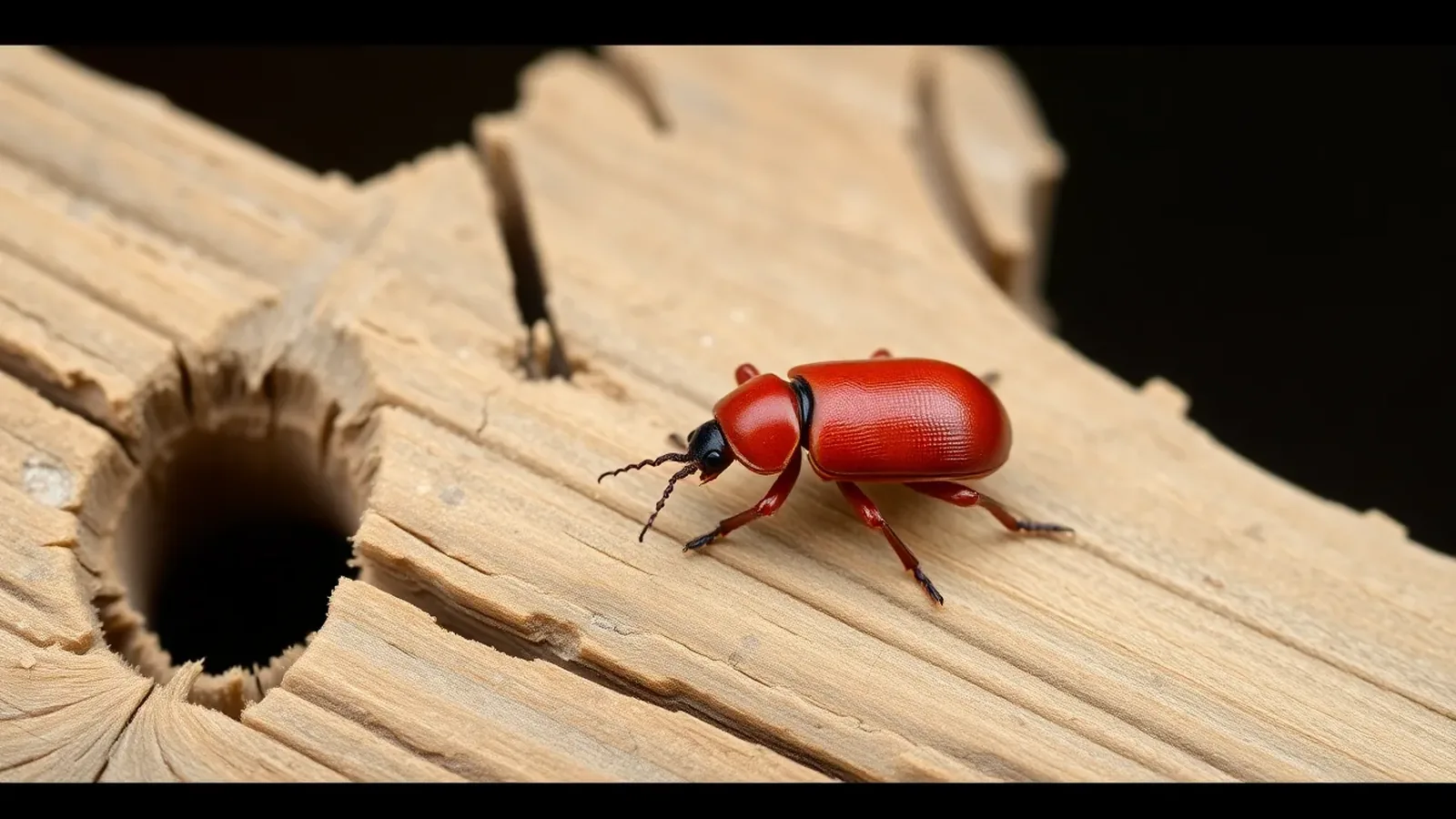
UK Woodworm Species Guide
Six wood-boring beetles attack timber in British homes, but only some are a real threat. Identify yours by its holes.
- Compare hole size, Latin name and risk
- Learn which beetles are serious
- Ask for a survey to confirm the species
Why the species matters
"Woodworm" is not one insect. It is the larva of several wood-boring beetles, and they differ in how much harm they do. The species decides how the timber is treated, and whether you need to worry at all.
Most UK infestations are the common furniture beetle. It is usually treated with a water-based spray and rarely threatens a building. At the other end, the death watch beetle works through old oak for decades, so it needs specialist care.
The first clue is the exit hole. Size, shape and the type of timber narrow the field quickly. The cards and table below give a quick comparison, while each profile gives the full picture.
UK woodworm species at a glance
From the everyday furniture beetle to the rare house longhorn, here is each beetle. Risk differs widely, because the damage depends on the species.
Common Furniture Beetle (Anobium punctatum)
The most widespread UK woodworm. It leaves small round holes in softwood and some hardwood. Exit hole: 1–2mm. Risk: Moderate.
Death Watch Beetle (Xestobium rufovillosum)
A beetle of old oak and historic buildings. It is slow, persistent and structurally serious. Exit hole: 2–3mm. Risk: High.
House Longhorn Beetle (Hylotrupes bajulus)
A rare but damaging softwood borer, found mostly in parts of Surrey. Building rules apply in some districts. Exit hole: 6–10mm (oval). Risk: Very high.
Powderpost Beetle (Lyctus brunneus)
Attacks the sapwood of new hardwood such as oak and ash. It leaves flour-fine dust. Exit hole: 1–2mm. Risk: Moderate.
Wood-Boring Weevil (Euophryum confine)
A secondary pest of damp, decaying timber. Its presence warns of a damp problem. Exit hole: 1mm (ragged). Risk: Low.
Bark Borer Beetle (Ernobius mollis)
Lives in bark and softwood edges. People often mistake it for furniture beetle, and it rarely needs treatment. Exit hole: 1–2mm. Risk: Low.
Exit holes are your first clue
Look at the holes in good light, because shadows hide their shape. Measure one with a ruler if you can, since a millimetre matters.
An adult beetle leaves a hole about as wide as its tunnel, so hole size points to the species. Crisp, pale-edged holes with fresh dust below suggest the beetle is active. Dark, dusty holes are often old.
Use the table as a rough guide, then read the full profile. For a full walk-through of holes, dust, tunnels and live beetles, see our signs of woodworm guide.
| Hole size and shape | Likely species | Risk |
|---|---|---|
| About 1 to 2mm, round | Common furniture beetle | Moderate |
| About 2 to 3mm, round | Death watch beetle | High |
| About 6 to 10mm, oval | House longhorn beetle | Very high |
| About 1 to 2mm, round, in hardwood | Powderpost beetle | Moderate |
| Small and ragged, in damp wood | Wood-boring weevil | Low (damp warning) |
| About 1 to 2mm, in bark only | Bark borer | Low |
Woodworm species: your questions
Why does it matter which species I have?
The species decides the treatment. The furniture beetle usually needs a surface spray, while the death watch beetle needs deeper work. Some species barely need treatment at all. A survey names the beetle first.
Can I identify woodworm from the holes alone?
Hole size is a strong first clue. However, timber type and dust colour matter too, and several species overlap. Use the table, then ask a surveyor to confirm.
Which species is the most serious?
For most homes the furniture beetle is the usual cause, and it is very treatable. The death watch and house longhorn beetles do the most structural harm, but both are far less common. See is woodworm dangerous?
Not sure which beetle you have?
Send your postcode and what you have seen, because the species decides the treatment. A local specialist will call to arrange a survey.