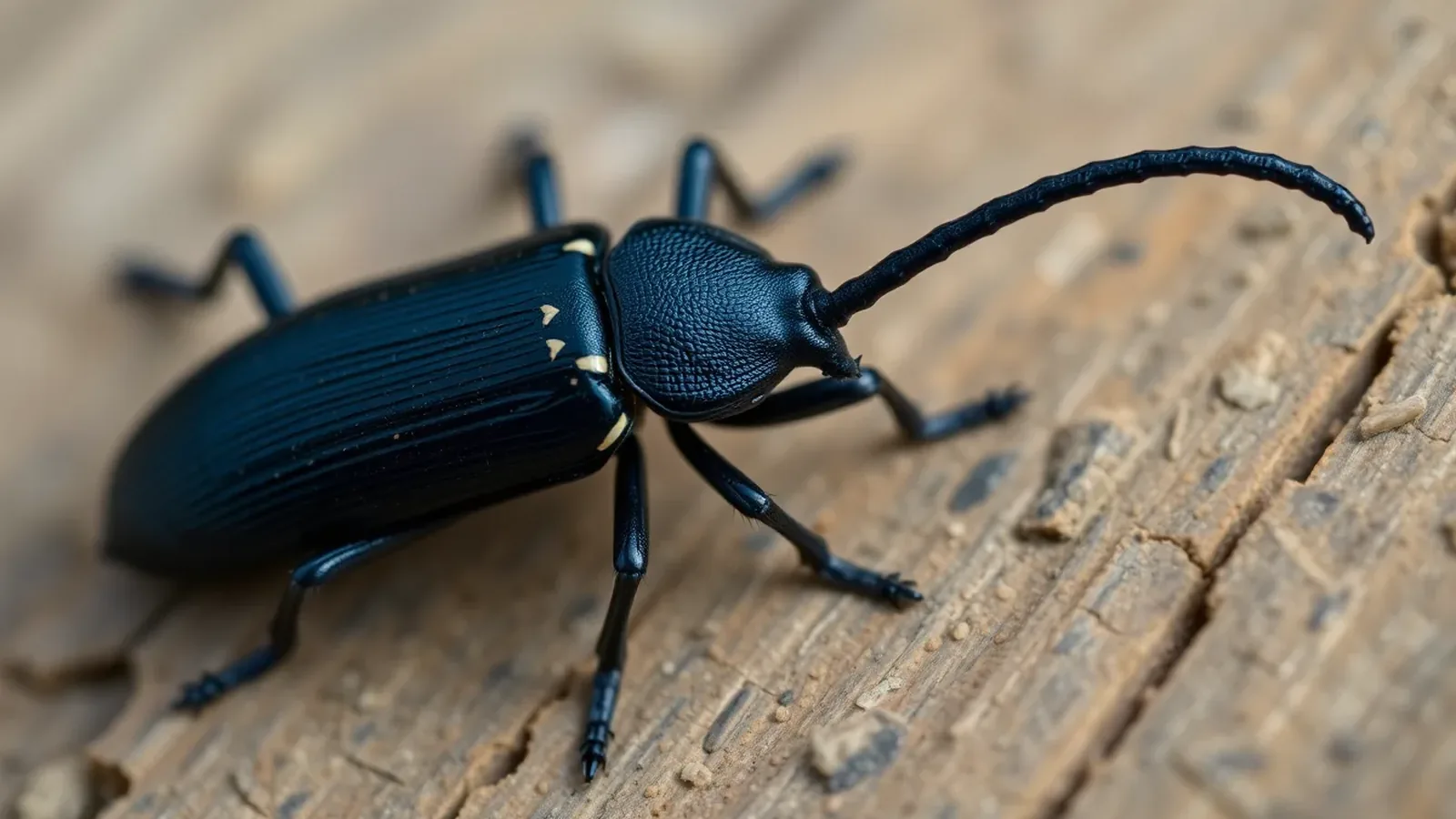
House Longhorn Beetle
A rare but serious borer of softwood roof timber. It is concentrated in parts of southern England.
- Oval holes about 6 to 10mm wide
- It attacks softwood in roof spaces
- Building rules apply in some districts
What to know about the house longhorn beetle
The house longhorn beetle is one of the largest wood-borers in Britain. Its larvae eat seasoned softwood, and they prefer roof timbers that stay warm. The beetle is mainly found in parts of Surrey and neighbouring areas, so most UK homes will never meet it.
Where it does occur, it can do serious harm. The surface may look intact while the inside is almost hollow. For that reason, building regulations in certain districts require roof timbers to be treated.
| At a glance | |
|---|---|
| Latin name | Hylotrupes bajulus |
| Adult size | About 10 to 20mm |
| Exit holes | Oval, about 6 to 10mm |
| Timber | Seasoned softwood |
| Active season | Summer |
How to recognise it
You will usually see the damage before you see the beetle. Four clues give it away, because each one leaves a mark.
The adult beetle
It is long, flat and dark brown, with pale hairs and long antennae. Adults are large enough to notice.
The exit holes
Holes are oval and large, around 6 to 10mm. They are far bigger than furniture beetle holes.
Bore dust (frass)
The dust is coarse and sausage-shaped. It often packs the tunnels behind a thin outer shell of wood.
Rippled timber
The surface can ripple where tunnels run just under it. Press with a screwdriver, because a hollow beam gives way.
How the beetle develops
Larvae grow slowly, and they stay hidden. The whole cycle can last for years.
Because adults can fly, the beetle can reach new buildings. A specialist survey is the only reliable way to confirm it.
- 1
Egg
The female lays eggs in cracks in warm softwood, mostly in roof spaces.
- 2
Larva
The grub feeds on the sapwood for years. It leaves the outer shell intact.
- 3
Pupa
The larva pupates just under the surface in late spring.
- 4
Adult
The adult chews an oval hole and flies out in summer to mate.
Where it lives and what it does
Knowing its favourite places helps you check the right spots, since each beetle has habits.
Where it is found
Look in roof rafters, purlins and other softwood in warm lofts. It is mainly recorded in parts of Surrey and nearby areas.
The damage it does
Larvae can remove most of the sapwood. A beam may lose strength while the outside looks fine.
How worried to be
Very high if confirmed. Call a specialist promptly, and avoid putting weight on suspect timber.
How the house longhorn beetle is treated
The method depends on the beetle, because each species needs a different approach.
Treatment usually means spraying all exposed roof timber with insecticide, often with boron paste in thicker members. Badly damaged members may need repair or replacement.
In specified districts of Surrey and nearby areas, building regulations require new softwood roof timber to be treated against this beetle. Ask your local building control team whether your address is covered.
Help in your area
This applies across the UK, but housing differs by city. For local detail, read about woodworm treatment in London and woodworm treatment in Manchester, because older streets hold more old timber.
House Longhorn Beetle: your questions
Is the house longhorn beetle found across the UK?
No. It is mostly found in parts of Surrey and neighbouring areas. If you live elsewhere, a different beetle is far more likely.
How do I tell it from the furniture beetle?
Check the hole size. Furniture beetle holes are tiny and round, while this beetle leaves large oval holes. See the species guide for a comparison.
Is it an emergency?
It can be, because the damage hides inside the wood. Avoid loading suspect timber and book a specialist survey quickly.
Do I have to treat my roof by law?
Rules apply to new work in specified districts. Check with building control. A specialist can explain what applies to your address.
Helpful next steps
Found signs of the house longhorn beetle?
Send your postcode and what you have seen, because the right treatment depends on the species. A local specialist will call to arrange a survey.