Skip to content
WoodwormTreatmentHQ

Identification

Active vs Historic Woodworm: How to Tell the Difference

How to tell whether woodworm is active or old and dormant — fresh pale frass, clean sharp holes, live beetles and the tissue-paper test surveyors use.

By The WoodwormTreatmentHQ Team · Updated 26 May 2026

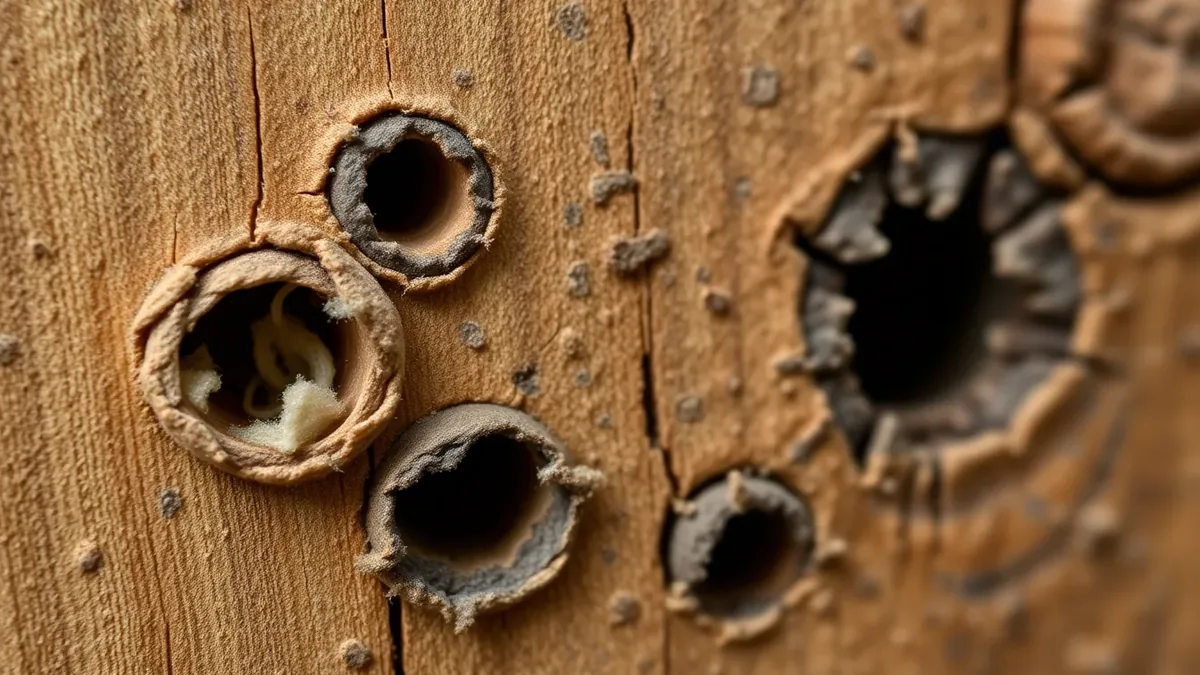
Close-up of woodworm exit holes in timber comparing fresh pale active holes with old grey dormant ones

Almost every older home in Britain has woodworm holes somewhere. The vast majority are harmless — old scars from an infestation that died out years or even decades ago. So the question that actually matters is not “do I have woodworm holes?” but “is the woodworm still active?” Get that right and you avoid two expensive mistakes: panicking and paying to treat long-dead damage, or ignoring a live infestation that is quietly spreading.

This guide shows you the signs surveyors use to separate active woodworm from historic, including the classic tests you can do yourself with nothing more than a torch, a knife and a sheet of tissue paper.

Active vs historic: what the difference means

Historic (or dormant) woodworm means the beetles have already been and gone. The larvae matured, the adults emerged through their exit holes, and for whatever reason — the timber dried out, the infestation ran its course — no new generation took hold. The holes remain, but nothing is living in the wood. Historic damage is, in itself, harmless. Unless the timber has been structurally weakened, it needs no treatment at all.

Active woodworm means the lifecycle is still turning. Larvae are tunnelling inside the timber right now, and adults are emerging, mating and laying fresh eggs each season. Most UK activity is the common furniture beetle (Anobium punctatum), which runs a 3–4 year cycle, most of it hidden inside the wood. Active infestation spreads and, over time, damages timber — so it is the case that warrants treatment.

The whole job is telling these two apart. Here is how.

The signs of active woodworm

No single clue is conclusive on its own, but together they paint a clear picture. Look for these.

Fresh, pale frass

Frass is the bore dust beetles push out as they tunnel. It is the most reliable indicator of activity, because fresh frass is being produced right now.

  • Active frass is pale, clean and gritty — like fresh, slightly creamy sawdust. It looks new because it is.
  • Historic frass is grey, dull and often compacted, discoloured by dust and age, or simply absent because it settled and was cleaned away long ago.

The decisive test is to clear the dust away, then check back over the following days and weeks. If fresh pale frass reappears beneath the holes — especially in spring and summer — the infestation is active. If nothing returns, that is a strong sign it is historic.

Clean, sharp, pale-edged exit holes

The exit holes themselves tell a story.

  • Active holes look freshly drilled: crisp, sharp edges and a pale, clean interior the same colour as fresh-cut wood. For the common furniture beetle these are 1–2mm; death watch beetle holes are larger at around 3mm.
  • Historic holes look weathered: darkened, dull or grey inside, with edges that have aged to the same colour as the surrounding timber, sometimes filled with old dust or polish.

A torch held at a low, raking angle makes the difference easy to see — fresh holes almost glow pale against older wood.

Live or freshly dead beetles

Seeing the beetle is direct evidence.

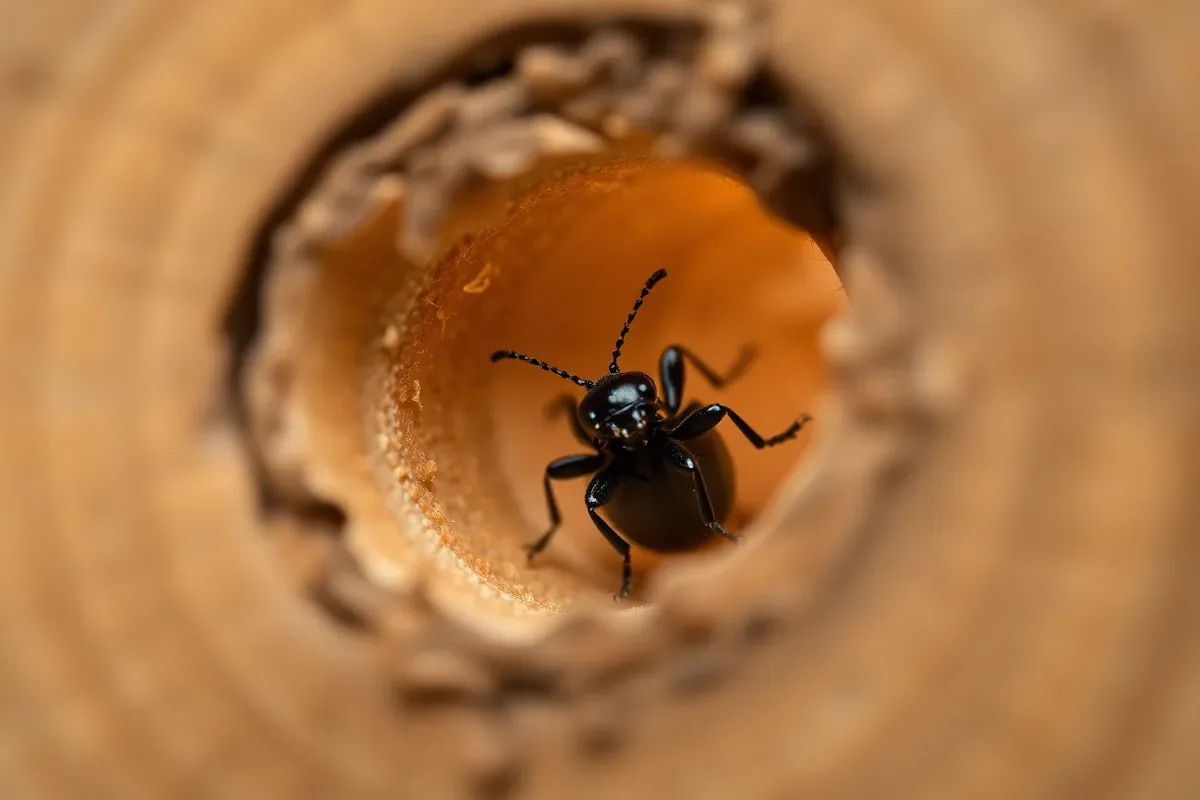
  • Live adult beetles indoors between roughly May and August, often near windows as they head for light, point to an active emergence.
  • Fresh dead beetles on windowsills or in cobwebs below affected timber suggest a recent hatch. (A dried, dusty beetle that has clearly been there for years does not.)

Tunnels visible in damaged wood

If a piece of affected timber breaks, snaps or is cut, look at the channels inside.

  • Active tunnels often contain pale, powdery frass and may reveal a creamy-white, C-shaped larva.
  • Historic tunnels are empty and clean, sometimes dusty, with no living grub and no fresh powder.

Hand holding a torch at a raking angle across timber to reveal fresh pale woodworm exit holes and bore dust

Two simple tests you can do yourself

You do not need specialist kit to make a sensible first assessment. Two homeowner tests, both used as quick field checks, tell you a lot.

The tissue-paper (clean-sheet) test

This is the classic way to catch fresh frass in the act.

  1. Clean all the old dust away from around the holes with a brush, so you are starting fresh.
  2. Lay a sheet of plain white tissue paper, lining paper or card directly beneath the suspect timber — under joists, below skirting, on the loft floor under rafters.
  3. Leave it undisturbed for a few weeks, ideally across the warmer months when adults are emerging.
  4. Check it. Fresh pale frass collecting on the clean paper means active woodworm. A clean sheet is reassuring evidence the infestation may be historic.

The white background makes new, pale dust obvious — far easier to judge than dust on a dark, dirty floor.

The probe test (for structural soundness)

This checks how far any damage has gone, which matters whether or not the beetle is still active.

  • Press a bradawl, a sturdy knife or even a flat-head screwdriver firmly into the timber, especially around holes and at joist ends.
  • Sound timber resists the point.
  • If the tool sinks in easily, or the surface crumbles and flakes away, the wood has been significantly weakened beneath the surface — a sign damage may be structural and worth a professional assessment, regardless of whether new frass is appearing.

Tapping the timber helps too: a hollow or papery sound where you would expect solid wood suggests extensive internal tunnelling.

Why getting this right matters

Distinguishing active from historic is not academic — it changes what you do and what you spend.

  • If it is historic, you generally need no treatment at all. Treating long-dead woodworm is wasted money. The only thing to check is whether old damage has weakened structural timber to the point it needs repair.
  • If it is active, prompt treatment is sensible, because an active infestation spreads to nearby timber and slowly weakens the wood it occupies. Our guide is woodworm dangerous? explains when active woodworm becomes a structural concern and when to act quickly.

There is one more reason to take this seriously: house sales. When woodworm shows up in a mortgage or building survey, lenders and buyers usually want it investigated and, if active, treated with a certificate. Knowing the difference helps you respond calmly rather than over-treating to satisfy a worried buyer.

When to call in a surveyor

Self-assessment gets you a long way, but bring in a professional when:

  • Your tissue-paper test produces fresh frass and you want it confirmed and treated.
  • The probe test reveals soft, crumbling or hollow-sounding timber — possible structural damage.
  • The holes are large (3mm or more), suggesting death watch or, in softwood, house longhorn beetle, both of which need specialist handling.
  • You cannot tell, or the woodworm has been flagged in a property survey.

A professional woodworm survey confirms beyond doubt whether the infestation is active, identifies the exact species, finds any damp driving it, and scopes treatment — so you treat only what genuinely needs treating, with a guarantee behind the work. If you do find active beetle and want the wider picture on confirming it, our guide to the signs of woodworm ties all the indicators together.

The bottom line

Old woodworm holes are extremely common and usually harmless; the only thing that matters is whether the infestation is still active. Look for fresh pale frass, clean sharp-edged holes, live beetles in summer and powder-filled tunnels for activity — and use the tissue-paper test to catch new frass and the probe test to check the wood is still sound. If the dust stays grey and the sheet stays clean, you very likely have historic damage that needs nothing. If fresh powder keeps appearing, it is time to act.

Get professional help

Not certain whether your woodworm is live or long gone? Get a free quote and a qualified surveyor will confirm whether it is active, identify the species, and tell you honestly whether it needs treatment — or whether those holes are simply old scars you can forget about.

Get rid of woodworm — for good

Book a free survey today. Fixed written quote, BPCA-trained technicians and a 30-year guarantee on treated timber.

0121 271 0061 No call centres · Speak to a surveyor

Request your free survey

Two details to get started.

Free survey · No obligation · 30-year guarantee