Guides
How to Treat Woodworm: The Complete UK Guide
Step-by-step guide to treating woodworm: how to confirm it is active, DIY treatment and products, when to call a professional, and how to prevent it returning.
By The WoodwormTreatmentHQ Team · Updated 14 April 2026
Finding fresh exit holes in your floorboards or roof timbers is unsettling, but woodworm is one of the more treatable timber problems a UK home faces. The key is to work in the right order: confirm the infestation is genuinely active, identify what you are dealing with, treat it correctly, and then remove the damp conditions that let the beetle thrive in the first place. Skip a step and you can spend money treating timber that was never alive, or kill the surface beetles while leaving the underlying cause untouched.
This guide walks through the whole process in plain terms. It covers the checks you can do yourself, the products that actually work, where the limits of DIY lie, and how a professional treatment differs from a tin of fluid from the hardware shop.
First, confirm the woodworm is active
“Woodworm” is the larvae of several wood-boring beetles. By far the most common in UK homes is the common furniture beetle (Anobium punctatum), which accounts for roughly three quarters of all cases and leaves neat round exit holes of about 1 to 2mm. The beetle lays eggs in bare timber, the grubs tunnel through the wood for three to four years, and then emerge as adults in late spring and summer, leaving the holes you see.
Holes on their own do not mean the infestation is live. They are simply where a beetle once left. The job is to work out whether anything is still inside the wood. Look for:
- Fresh frass. This is the fine, gritty bore dust the larvae push out. Active frass is clean, pale and the colour of the timber, and it builds up again within days of being brushed away. Old, greying frass that does not return is a sign the activity has stopped.
- Sharp-edged holes. New exit holes have crisp, light-coloured rims. Old holes look dull, darkened and weathered, often with dust or paint sitting in them.
- Live or dead beetles. Small reddish-brown beetles on windowsills near affected timber between May and September, or their bodies caught in cobwebs, point to a current generation.
A simple test is to brush or hoover away all visible frass, mark a few holes with a pencil, and check again after a few weeks in spring or summer. New frass or new unmarked holes mean the woodworm is active and needs treating. If you want to be certain before spending anything, our guide to active vs historic woodworm goes through the surveyor’s checks in detail, and the signs of woodworm article shows what each clue looks like.
Treating woodworm yourself: the DIY route
If the infestation is active, limited to accessible timber, caused by the common furniture beetle, and the wood is structurally sound, DIY treatment is a reasonable option. The standard home product is a water-based permethrin woodworm killer, sold by the litre in most DIY stores. Permethrin is a contact insecticide that kills emerging adults and newly hatched larvae as they move through the treated surface layer.
Step by step
- Clear and clean the area. Lift carpets or coverings, move furniture, and brush or vacuum all timber surfaces so the fluid soaks into the wood rather than sitting on dust.
- Protect yourself and the room. Wear gloves, eye protection and a suitable respirator, open windows, and cover anything you do not want splashed. Keep people and pets out until the timber is dry.
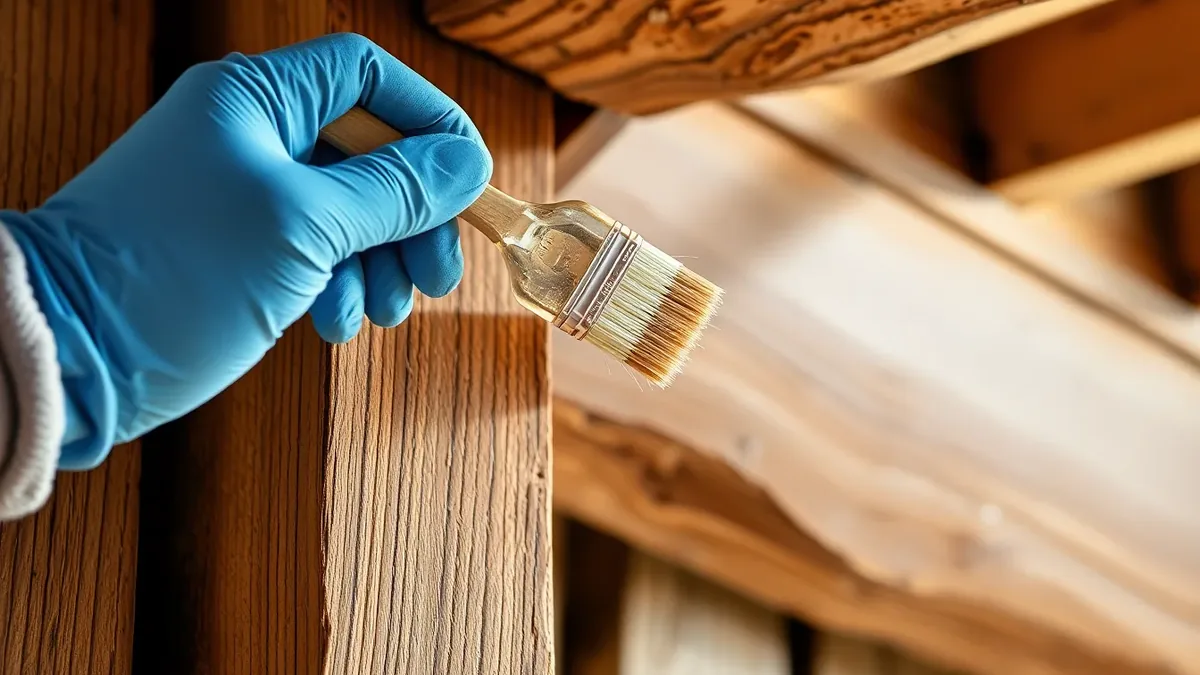
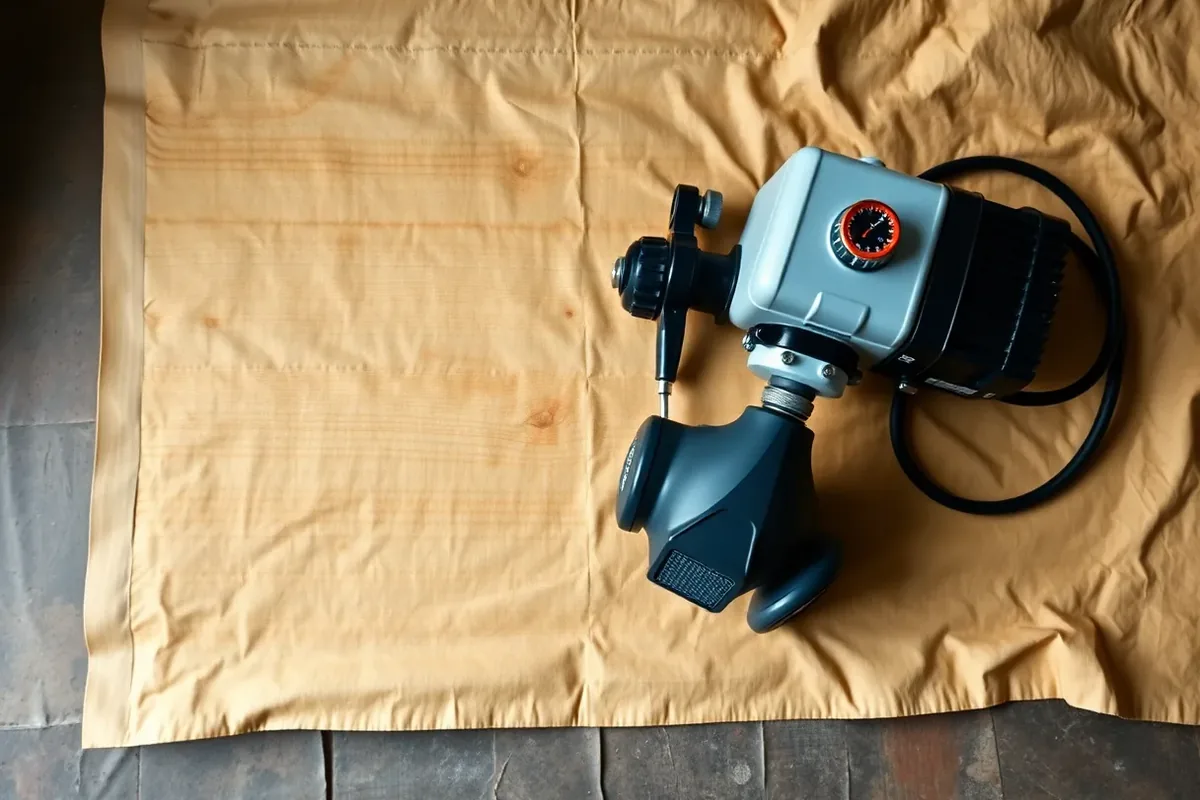
- Apply the fluid generously. Brush, spray or use a coarse low-pressure sprayer to flood the surface to the point of run-off. Pay special attention to joist sides, end grain and any holes. Most products recommend two coats, the second once the first is touch-dry.
- Treat a margin around the visible damage. Beetles spread, so extend treatment well beyond the holes you can see.
- Let it dry and ventilate. Water-based products are usually touch-dry within a few hours. Follow the tin for re-entry and re-covering times.
For deeper or structural timber, a boron-based gel or paste is better suited because it diffuses further into the wood than a surface spray. Borate products are also lower in odour and widely used on joist ends and harder-to-reach beams. Our best woodworm treatment products review compares the leading permethrin and boron options available in 2026, including which work and where they fall short.
Always read and follow the label. Woodworm fluids are biocidal products regulated for safety, and the manufacturer’s instructions on ventilation, protective equipment and re-entry exist for good reason. The HSE’s guidance on biocides and pesticide safety is the authoritative reference for handling these chemicals at home.

When to call a professional instead
DIY has real limits, and there are situations where treating it yourself is false economy. Call in a specialist if any of the following apply:
- You cannot tell what species it is. Death watch beetle (Xestobium rufovillosum), which leaves 3mm holes in old oak and historic buildings, and the rare but destructive house longhorn beetle (Hylotrupes bajulus), with 6 to 10mm oval holes, both need different handling and, in the longhorn’s case, can carry building-regulation implications in parts of Surrey.
- The damage looks structural. Crumbling joist ends, a blade that sinks into a beam, sagging floors or weakened rafters need a survey and possibly timber repair, not just a coat of fluid.
- There is damp or rot present. Wood-boring weevil and persistent infestations almost always signal an underlying moisture problem. Treating the beetle without fixing the damp simply invites it back.
- The roof space is involved. Roofs are awkward, often poorly ventilated, and may host bats, which are legally protected in the UK. Disturbing a bat roost is an offence, so roof timber treatment may need a bat check first.
- You need a guarantee. A sale, a mortgage valuation or a landlord obligation usually calls for a certificated treatment with a long-term guarantee, which DIY cannot provide.
A professional starts with a proper inspection. You can read what that involves on our woodworm survey page, and the full range of guaranteed options on the main woodworm treatment hub.
How professional treatment works
A specialist treatment follows a clear sequence, and understanding it helps you judge whether a quote is thorough.
- Survey and identification. A qualified surveyor confirms the infestation is active, identifies the beetle, maps the affected timber and checks for damp and rot. You receive a written report and a fixed-price quote, and the survey is free for most homeowners.
- Preparation. Floorboards may be lifted, surfaces cleaned, and access created to joist ends, wall plates and roof timbers.
- Application. The standard treatment is a professional-grade water-based permethrin spray applied to all at-risk timber. For structural members, deep voids or severe cases, boron gel and paste are injected or applied to drive the active ingredient further into the wood. Where infestation is widespread, fogging or whole-property approaches may be used. You can compare these on our insecticidal spray treatment page.
- Repairs where needed. Timber weakened beyond safe load-bearing is spliced, resin-repaired or replaced.
- Guarantee and certificate. A reputable firm issues a long-term guarantee, commonly up to 30 years, and a certificate that satisfies surveyors and lenders.
Treated timber is usually touch-dry within hours, and most homes are treated in a single day. For an idea of the figures involved, garage or single-room work starts from around £200 plus VAT, a roof space from around £400 plus VAT, and whole-house treatment typically runs between £500 and £3,000 depending on size and access.
Preventing woodworm from coming back
Killing the current generation is only half the job. Woodworm needs damp, sapwood-rich timber to take hold, so prevention is mostly about keeping wood dry and well aired.
- Control moisture. Fix leaks, improve sub-floor and loft ventilation, clear blocked air bricks, and address any rising or penetrating damp. Beetles struggle in timber below about 12 per cent moisture content.
- Improve airflow. Good ventilation in cellars, voids and roof spaces keeps timber dry and far less attractive to egg-laying females.
- Inspect regularly. Check vulnerable areas each spring, especially in older properties, and watch any reclaimed or second-hand timber and furniture you bring into the house, as these are a common way infestations arrive.
- Treat bare new timber. When replacing joists or rafters, a pre-treated or freshly treated timber resists future attack.
Address the damp and you remove the conditions woodworm depends on. That is why a good professional treatment looks at the whole picture rather than just the beetle.
Get professional help
If you have confirmed active woodworm, are unsure what species you are dealing with, or want a guaranteed treatment backed by a written warranty, the simplest next step is a free survey from a qualified specialist. Get a free quote and we will confirm whether the infestation is active, identify the beetle and give you a fixed written price, with no obligation.