Skip to content
WoodwormTreatmentHQ

Guides

DIY vs Professional Woodworm Treatment

When DIY woodworm treatment works, when it fails, and how the costs, guarantees and results really compare with hiring a professional. An honest guide.

By The WoodwormTreatmentHQ Team · Updated 13 May 2026

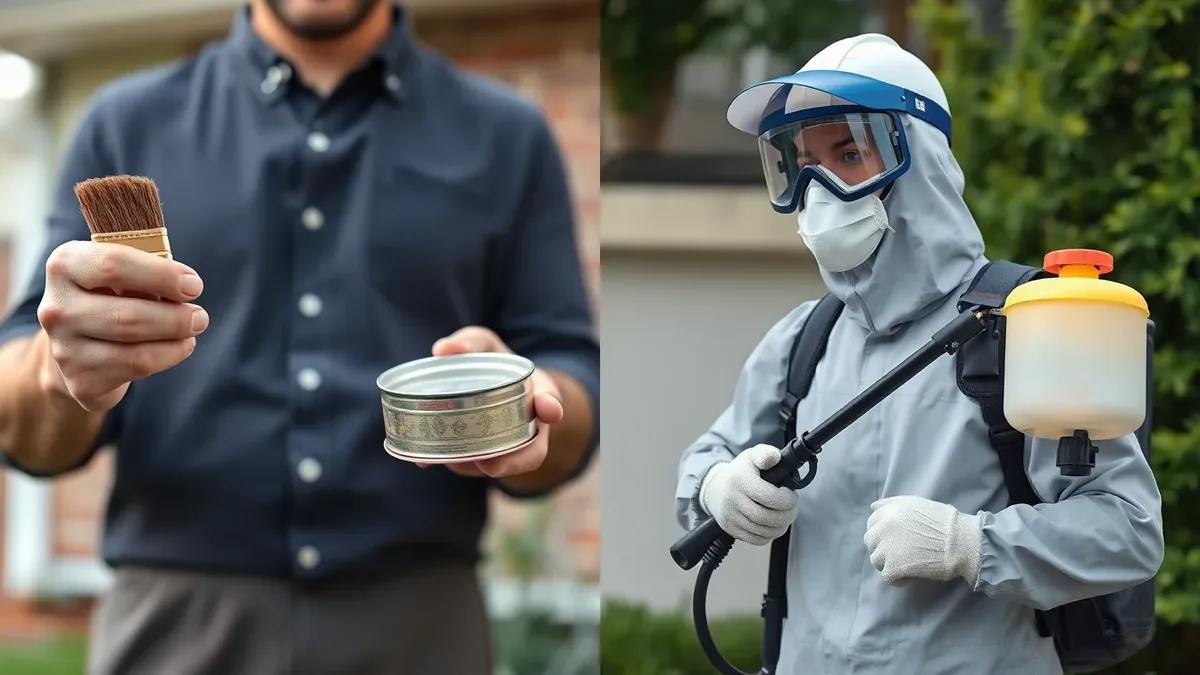
Tin of DIY woodworm killer and brush beside a professional sprayer on exposed timber joists

When you find woodworm, the choice quickly comes down to one question: do you treat it yourself with a tin from the hardware shop, or do you bring in a professional? Both are legitimate answers, but they suit very different situations. DIY can be perfectly effective on the right job and a costly mistake on the wrong one. This guide gives you an honest comparison so you can decide which makes sense for your property, rather than defaulting to whichever feels cheaper.

When DIY woodworm treatment is fine

Treating woodworm yourself is a reasonable choice when all of the following are true:

  • The infestation is active and you have confirmed it. Fresh, pale frass that reappears after cleaning, sharp-edged holes and live beetles in spring or summer all point to a live problem worth treating. If you are unsure, our signs of woodworm checks will help you confirm it.
  • It is the common furniture beetle. This species, with its 1 to 2mm round holes, causes about three quarters of UK cases and responds well to standard DIY products.
  • The timber is accessible. Exposed floorboards, joists you can reach, furniture and visible roof timbers are all straightforward to treat by hand.
  • The wood is structurally sound. If a blade does not sink into the timber and floors feel firm underfoot, you are dealing with surface damage rather than a structural problem.
  • The area is contained. A single room, a piece of furniture or a small, defined patch is manageable. A whole house is not a sensible DIY project.

In these cases, a water-based permethrin woodworm killer applied thoroughly in two coats, or a boron gel for slightly deeper timber, will usually do the job for a modest outlay. Our best woodworm treatment products review compares the leading 2026 options and explains how to apply them properly.

What a good DIY job involves

DIY does not mean a single quick wipe-over. To stand a chance of working, the treatment needs to be done well: clear and clean the timber, wear proper protective equipment, ventilate the room, flood the surface to run-off, treat a generous margin beyond the visible holes, and apply a second coat once the first is touch-dry. Water-based products are usually touch-dry within a few hours. The how to treat woodworm guide sets out the full method.

A word on safety: woodworm fluids are biocidal products and must be handled according to the label. The HSE’s guidance on biocides and pesticide safety is the authoritative reference on ventilation, protective equipment and re-entry times.

Side-by-side of a homeowner brushing on DIY woodworm fluid and a professional applying boron paste to a structural joist end

When DIY fails

DIY goes wrong for predictable reasons, and the cost of those failures often dwarfs the price of a professional job. Watch out for these traps:

  • Treating dead damage. Many properties carry old woodworm holes from an infestation that died out years ago. Spend money treating historic damage and you have achieved nothing. A survey, or the checks in our active versus historic guidance, prevents this.
  • Misidentifying the beetle. Death watch beetle in structural oak (3mm holes) and the rare house longhorn beetle (6 to 10mm oval holes, with building-regulation significance in parts of Surrey) are not jobs for a tin of general-purpose fluid. Get the species wrong and you under-treat a serious problem.
  • Surface-only penetration. Shop-bought sprays treat the outer few millimetres well but barely reach deep into structural timber. Larvae tunnelling at the core of a thick joist can survive a surface coat entirely.
  • Ignoring the underlying damp. Most infestations are linked to moisture. Kill the beetles but leave the damp, and the timber simply gets reinfested. Wood-boring weevil in particular is a flag for an active damp problem that needs fixing first.
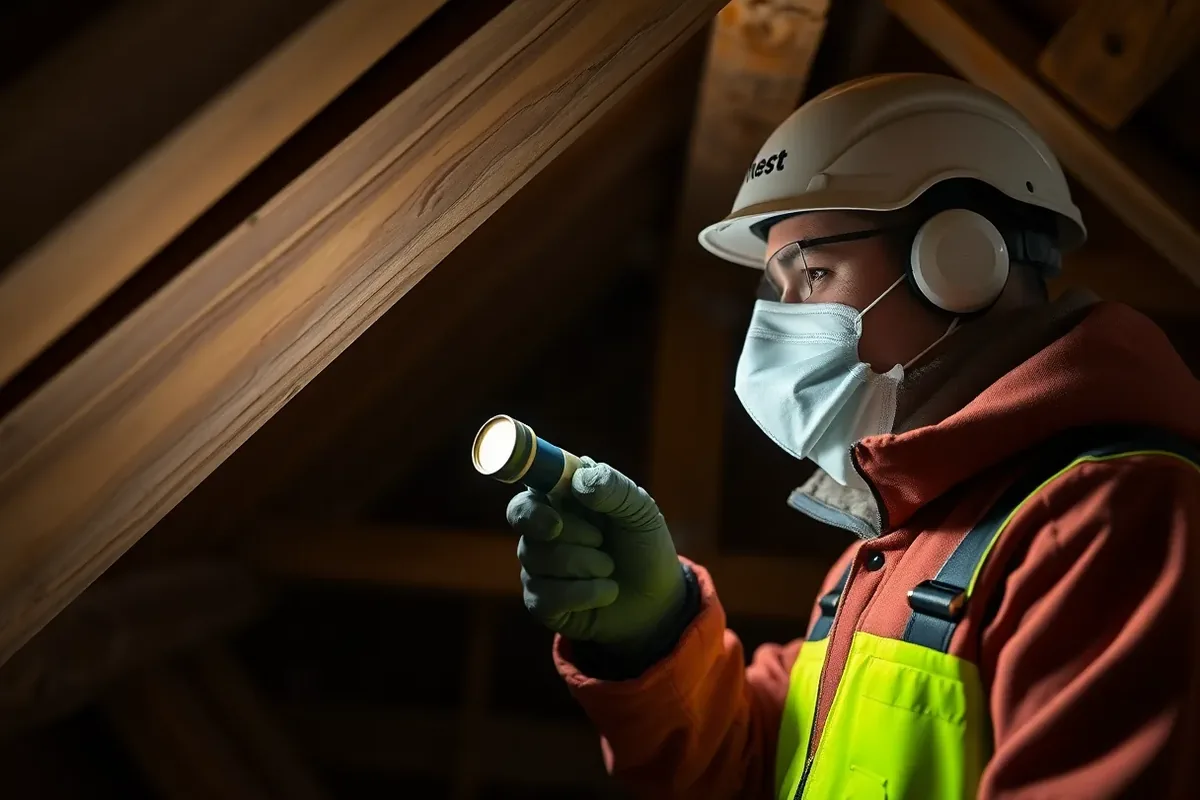
  • Poor or unsafe access. Roof spaces, sub-floor voids and high timbers are difficult and sometimes hazardous to treat properly without the right equipment. Roofs may also host bats, which are legally protected, so disturbing them is an offence.
  • Incomplete coverage. Miss a joist end, a hidden wall plate or the far side of a beam, and the infestation continues from the untreated timber.

If any of these apply, professional treatment is not an indulgence, it is the route that actually solves the problem.

What a professional brings

A specialist treatment differs from DIY in several meaningful ways, not just in who holds the brush.

  • A proper survey and diagnosis. A qualified surveyor confirms the infestation is active, identifies the species, maps the affected timber and checks for damp and rot, then issues a written report. The survey is free for most homeowners. See what is involved on our woodworm survey page.
  • Deeper, more complete treatment. Professionals use commercial-grade permethrin spray for accessible timber and boron gel or paste, injected or applied, to drive the active ingredient into structural members and hard-to-reach voids. Widespread infestations may be treated by fogging. The woodworm treatment hub covers the full range.
  • Repairs where needed. Timber weakened beyond safe load-bearing is spliced, resin-repaired or replaced, something DIY cannot address.
  • A long-term guarantee. Reputable firms issue a guarantee, commonly up to 30 years, and a certificate. This is often insurance-backed and is the part that satisfies surveyors and mortgage lenders.

Most homes are treated in a single day, and treated timber is usually touch-dry within hours.

Cost and guarantee: how they really compare

On materials alone, DIY wins easily. A five-litre tin of permethrin fluid runs roughly £25 to £45, so a small, accessible job might cost under £100. Professional treatment is more: a single room or garage from around £200 plus VAT, a roof space from around £400 plus VAT, and whole-house work typically £500 to £3,000 plus VAT.

But price per litre is the wrong comparison. What you are really weighing is the total cost of getting the result you need:

  • DIY buys you fluid and your own labour, with no survey, no guarantee and no protection if you have misjudged the species, the extent or the cause. Get it wrong and you pay twice, first for the failed attempt and then for the proper job.
  • Professional buys you diagnosis, deeper treatment, any necessary repairs, and a long-term guarantee that holds value when you sell, remortgage or let the property.

For a sale, a mortgage valuation or a landlord obligation, the guarantee and certificate alone usually justify the professional route, because a DIY job carries no documentation a surveyor will accept. Our woodworm treatment cost guide breaks the figures down room by room.

What about landlords and house sales?

For owner-occupiers staying put, the DIY-versus-professional decision is largely practical. For landlords and anyone buying or selling, paperwork changes the calculation.

  • Selling a home. If a buyer’s survey flags woodworm, the lender or buyer will usually want evidence it has been dealt with properly. A DIY treatment leaves nothing a surveyor will accept, whereas a professional treatment provides a certificate and a long-term guarantee that can keep a sale on track and protect the price.
  • Buying a home. Where a valuation report recommends a timber specialist, a professional survey gives you a firm figure to negotiate with or to plan around, rather than a guess.
  • Letting a property. Landlords have a duty to keep a rented home safe and in good repair. A guaranteed, certificated treatment is far easier to stand behind than a tin applied between tenancies, and it gives you documentation if a tenant later raises a concern.

In all three cases the guarantee and certificate are the deciding factor, and those only come with professional treatment. Our woodworm treatment hub explains the certification and warranty that accompany a professional job.

A simple way to decide

Use this rule of thumb:

  • Choose DIY if the infestation is confirmed active, limited, accessible, structurally harmless and clearly the common furniture beetle, and you do not need a guarantee.
  • Choose a professional if the damage looks structural, the species is uncertain, damp is involved, the roof is affected, the infestation is widespread, or you need a warranty for a sale, mortgage or tenancy.

When in doubt, a free survey costs nothing and removes the guesswork before you commit either way.

Get professional help

If your woodworm is anything more than a small, contained, surface-level problem, or you simply want certainty and a guarantee, a professional survey is the safest first move. Get a free quote and a qualified surveyor will confirm whether the infestation is active, identify the beetle and give you a fixed written price, with no obligation.

Get rid of woodworm — for good

Book a free survey today. Fixed written quote, BPCA-trained technicians and a 30-year guarantee on treated timber.

0121 271 0061 No call centres · Speak to a surveyor

Request your free survey

Two details to get started.

Free survey · No obligation · 30-year guarantee