Guides
Woodworm in a Property Survey: A Buyer's Complete Guide
Found woodworm flagged in your survey report? This guide explains what it means, whether to proceed, how to negotiate with the seller and what a specialist report will tell you.
By The WoodwormTreatmentHQ Team · Updated 3 June 2026
A woodworm flag in a survey report is one of the most common findings in older UK properties — and one of the least understood. Many buyers panic and assume the worst; others dismiss it entirely. The right response depends on the specific finding, the species, and whether the infestation is active or historic.
This guide explains what the survey report is telling you, what questions to ask, whether to proceed, and how to use a specialist report to your advantage.
What does it mean when a survey flags woodworm?
A standard RICS HomeBuyer Report or Building Survey will note any visible evidence of woodworm — typically exit holes, frass or, in some cases, active beetles. The report will usually indicate whether the surveyor considers the infestation to be active or historic, and may recommend further investigation by a specialist.
Key things to understand:
- A flag is not automatically a problem. Historic woodworm — infestations that have died out naturally — requires no treatment and carries no ongoing risk. Many period properties have historic woodworm in loft timbers or sub-floor joists from infestations that ended decades ago
- The surveyor’s role is to flag, not diagnose. Chartered surveyors are trained generalists, not woodworm specialists. Their report notes the presence of exit holes; it is a specialist’s job to determine whether those holes represent a live or dormant problem
- The recommendation for further investigation is standard. Even if the surveyor’s assessment suggests historic infestation, most reports will recommend a specialist inspection to confirm this. This is cautious professional practice, not a signal of disaster
Is it safe to buy a house with woodworm?
In most cases, yes — provided you understand what you are buying and take appropriate steps:
Where woodworm is rarely a problem:
- Exit holes in loft rafters of a pre-1950s property, with no fresh frass and no soft timber — almost certainly historic
- Old furniture beetle damage in a Victorian sub-floor void with good ventilation — may have self-resolved as the timber dried with central heating
- Isolated holes in skirtings or floorboards in good structural condition
Where woodworm warrants careful investigation:
- Active infestation (fresh frass, new exit holes, adult beetles) in structural timber
- Exit holes larger than 3mm — suggests deathwatch beetle, which is a more serious structural concern
- Multiple generations of infestation visible (extensive gallery networks, collapsed sections of timber)
- Any suggestion of structural compromise — soft joists, deflecting floors, sagging rafters
Where woodworm is a genuine red flag:
- House longhorn beetle suspected in roof timbers — specialist assessment and potentially structural engineer involvement required before proceeding
- Extensive active deathwatch beetle in old oak structural beams
- Structural timber showing signs of collapse or near-failure due to combined woodworm and rot damage
Getting a specialist report before exchange
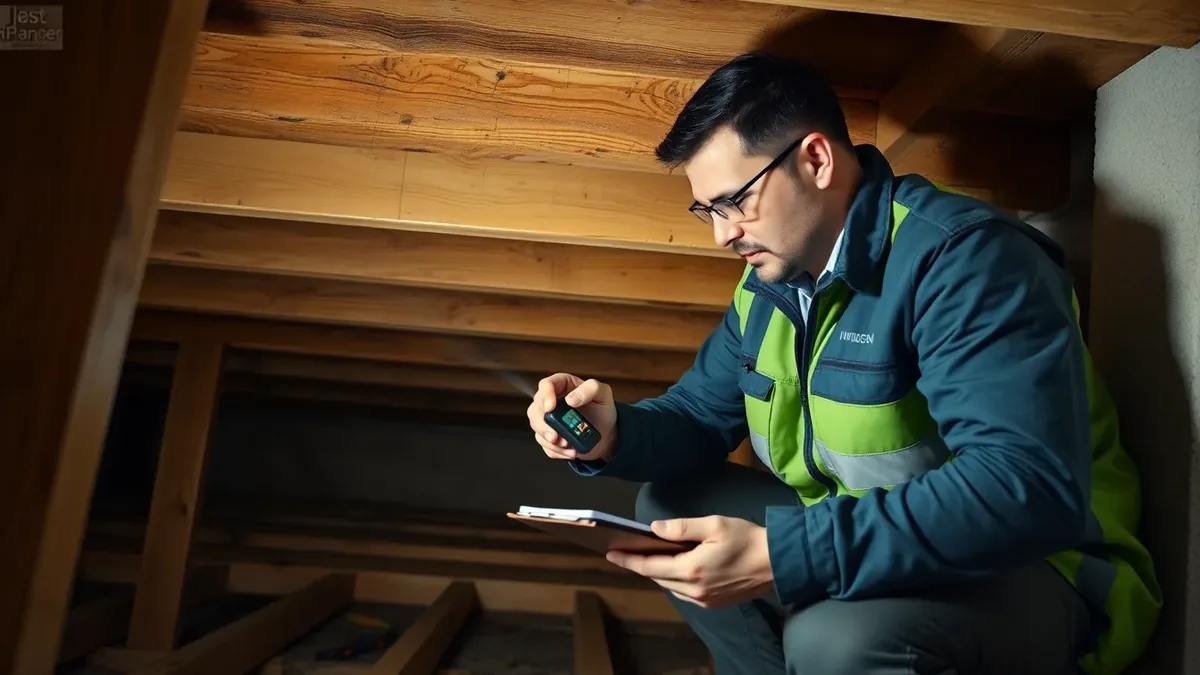
If the survey flags woodworm, commissioning a specialist pre-purchase survey is the most important thing you can do. A specialist inspection will:
- Confirm active vs historic — the single most important question
- Identify the species — critical for assessing structural risk and treatment cost
- Scope the full extent — a specialist will access sub-floor voids, loft spaces and any other areas where woodworm may be present beyond what the surveyor checked
- Provide a costed treatment report — a written quote for any treatment needed, which becomes a negotiating tool
Most specialist surveys can be arranged within two to three working days. Always choose a PCA-accredited (Property Care Association) specialist to ensure professional standards and an insured, guaranteed treatment certificate.

What should you ask the seller to do?
Once you have a specialist report, you have three options:
Option 1: Request treatment by a professional before completion
Ask the seller to have the property treated by a PCA-accredited company and to provide the treatment certificate and guarantee before exchange. This is the cleanest outcome — you receive a property that is already treated and guaranteed, with documented proof.
Option 2: Negotiate a price reduction
Request the seller to reduce the purchase price by the cost of treatment — using the specialist’s written quote as evidence. This is appropriate where treatment is straightforward and costs are modest (typically £300–£2,000 for a standard domestic treatment). You then arrange treatment after completion.
Option 3: Request a retention
Withhold a sum equivalent to the treatment cost from completion funds, to be released to the seller once treatment has been completed and certificated. Your solicitor handles the mechanics of a retention.
How much does woodworm treatment cost?
For context when negotiating:
| Scope | Typical cost range |
|---|---|
| Single piece of furniture | £50–£200 |
| Ground floor joists (small property) | £300–£600 |
| Loft/roof space | £400–£900 |
| Whole house (joists + loft) | £700–£2,500 |
| Extensive structural treatment with repair | £2,000–£8,000+ |
Read the detailed woodworm treatment cost guide for a full breakdown by property type.
What if the seller refuses to act?
If the seller is unwilling to treat, reduce the price or agree a retention — and the infestation is confirmed active — you face a straightforward decision: accept the risk and proceed with treatment after completion, or walk away.
For a historic infestation that a specialist confirms needs no treatment, the seller’s refusal to act may be entirely reasonable — and you can proceed with confidence knowing no treatment is necessary.
For an active structural infestation in structural timber, a seller who refuses any remedy is a significant risk signal. Get very clear specialist advice on the cost and scope of remediation before deciding.
Does a woodworm treatment certificate transfer to a new owner?
Yes. A PCA-standard treatment certificate and guarantee from a reputable company is transferable on sale. If the seller already has a valid certificate — typically a 20–30 year guarantee on treated timber — this may be sufficient without further treatment, provided the certificate covers the affected areas and is from an accredited company. Ask your solicitor to verify the certificate during conveyancing.
Arranging a pre-purchase survey
We offer free woodworm surveys for buyers at the pre-purchase stage. We produce a written report suitable for use in conveyancing negotiations, confirm active vs historic status, identify species, and provide a costed treatment recommendation if needed.
Read more: Active vs historic woodworm · Is woodworm dangerous? · Woodworm treatment cost