Skip to content
WoodwormTreatmentHQ
Specialist fogging a loft roof space to treat widespread woodworm in the rafters and joists

Whole-property treatment

Fumigation & Whole-Property Treatment

For widespread or repeat woodworm, and for timber a hand-held spray can't reach, ULV fogging treats the whole void in one controlled application.

  • Reaches eaves, voids and boarded-in timber a lance can't touch
  • Water-based permethrin — touch-dry in hours, treated in a day
  • Backed by a written certificate and a 30-year guarantee
Call 0121 271 0061 Mon–Sun, 7am–8pm

Get your free quote

Tell us what you've noticed and where. A local woodworm surveyor will call you back to arrange a free, no-obligation survey.

What it is

Treating the whole space, not just the timber you can see

Most active woodworm in UK homes is the common furniture beetle (Anobium punctatum), which leaves crisp 1–2mm exit holes and runs on a three-to-four-year lifecycle. A standard treatment hand-sprays the affected joists and rafters with a water-based insecticide. That works beautifully where every face of the timber is exposed and reachable.

Not every roof or floor is like that. Eaves are cramped, floors are boarded over, timber sits behind fixed cupboards, and infestation can spread across a whole void rather than one beam. In those cases, whole-property treatment by ultra-low-volume (ULV) fogging earns its place. A specialist machine turns a water-based permethrin solution into a fine, drifting mist that fills the entire space and settles onto surfaces a lance can never reach.

The aim is simple: get the active ingredient into contact with every emergence surface across the void, so beetles leaving the wood pick up a lethal dose and the cycle is broken. It is a coverage tool for difficult, widespread cases — not a stronger chemical, but a smarter way to deliver it everywhere at once.

When we use it

Four situations where whole-property fogging makes sense

Fogging is not the default treatment. We recommend it when coverage is the problem — when the beetle is everywhere, keeps returning, or hides where a lance can't follow.

Widespread infestation

When exit holes and fresh frass appear across a whole roof space, several rooms or an entire floor, treating timber piece by piece is slow and easy to under-cover. Fogging blankets the whole volume in one controlled application.

Repeat or returning beetle

If woodworm has come back after earlier DIY or partial treatment, it often means voids and hidden faces were missed. A whole-property fog reaches the surfaces a lance never touched, breaking the emergence cycle.

Limited spray access

Cramped lofts, packed eaves, boarded floors and timber behind fixed cupboards are hard to spray directly. An airborne mist settles onto faces a technician simply cannot reach with a hand-held lance.

Cluttered or furnished rooms

Where rooms are still in use or full of stored items, fogging treats the air space and exposed timber efficiently once the area is cleared, with far less dismantling than wholesale hand-spraying.

How it's done

How rooms are prepared and sealed

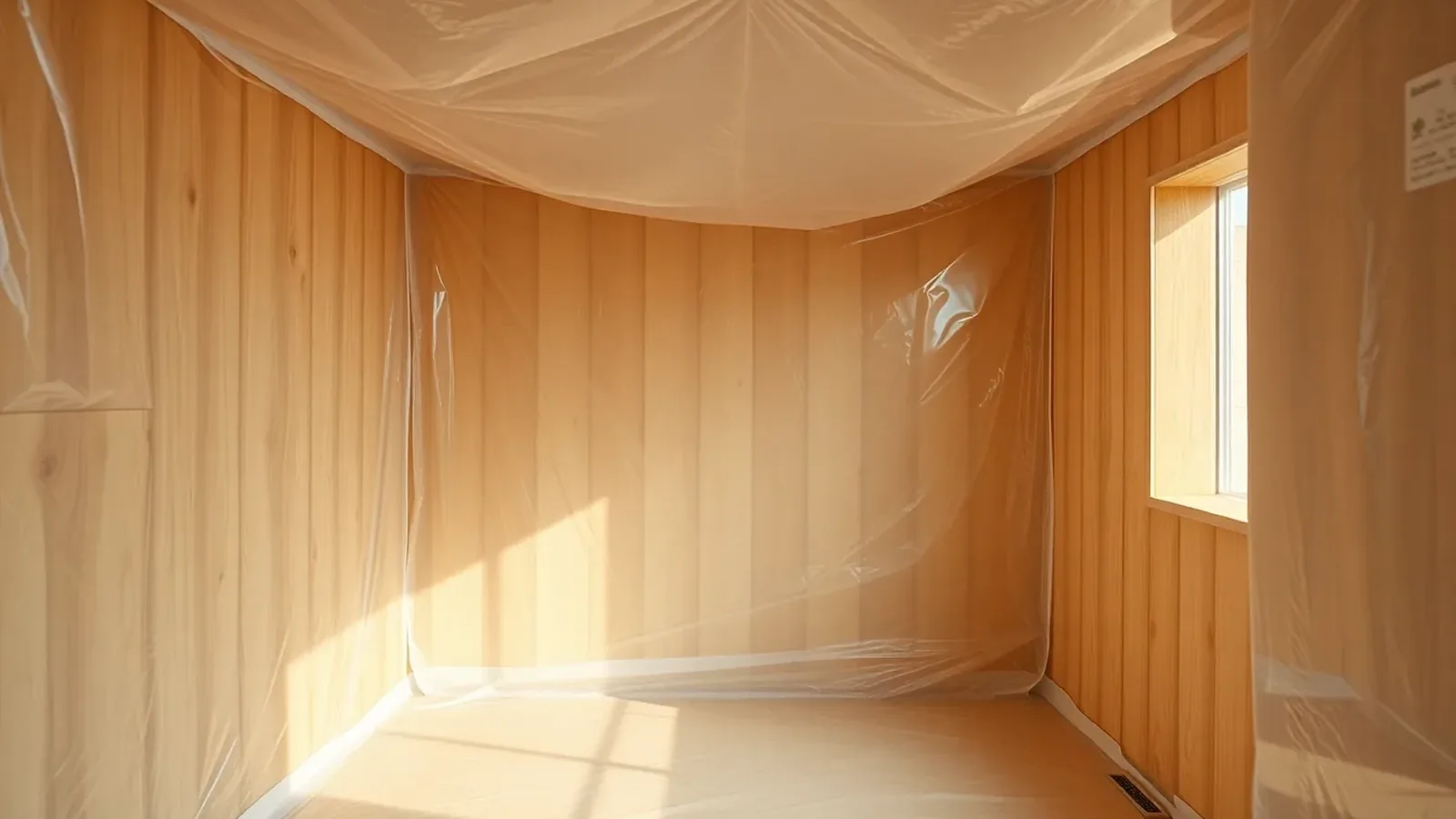
Good preparation is what makes fogging effective. A sealed, cleared space keeps the mist in contact with the timber long enough to work and keeps everything else clean.

1

Clear and protect the space

We remove or sheet over soft furnishings, bedding and anything that should not be coated, take down food and open foodstuffs, and cover fish tanks and sensitive surfaces. Drawers and cupboard doors are opened so the mist reaches inside.

2

Seal the treatment zone

Doors, hatches and gaps are taped or screened so the fog stays where it is needed and disperses evenly. Sealing the room keeps the active ingredient in contact with the timber for long enough to work, rather than drifting away.

3

Fog, settle and ventilate

A ULV machine releases a fine permethrin mist that fills the void and coats every surface. After the settling period the technician ventilates the rooms, confirms surfaces are touch-dry, and gives you a clear re-entry time — usually the same day.

Safety first

Safe for your home, handled properly

The products we fog with are water-based permethrin formulations — the same kind of active ingredient used in standard woodworm spray, applied at controlled professional rates. Every biocide we use is approved under UK rules overseen by the HSE.

The sensible precaution is simply not being in the room while the fog is airborne. You and your pets leave the treated zone, the mist settles, then the technician ventilates and confirms surfaces are touch-dry before anyone returns — normally the same day.

If your roof shows any sign of bats, treatment stops until that is resolved. Bats and their roosts are protected by law, so a roof-space job may need a bat check first. See the GOV.UK guidance on bats and the law. Our surveyor checks for this before any whole-property treatment is booked.

Before we fog, you'll know

  • Exactly which rooms are being treated and how to prepare them.
  • What to cover or remove — food, fish tanks, sensitive pets.
  • A clear re-entry time once surfaces are dry and rooms ventilated.
  • A written treatment certificate and 30-year guarantee afterwards.

Part of the plan

How fogging complements spray treatment

Fogging and spraying are partners, not rivals. On a typical widespread job we hand-spray the exposed structural timber — the joists, rafters and bearers you can reach — with insecticidal spray, which lays down a heavier, longer-lasting film exactly where the load-bearing wood is. We then fog the rest of the void to carry the active ingredient onto the faces, edges and hidden timber a lance cannot coat.

Where damage has already weakened a beam or joist, treatment alone is not enough — the timber may also need structural timber repair. And every approach starts the same way: a proper diagnosis. Our woodworm treatment service surveys the property first, identifies the species and the spread, and only then chooses spray, fogging, paste, repair or a combination.

For landlords, letting agents and managing agents handling tenanted blocks or larger buildings, whole-property fogging is often the most practical way to treat an occupied property quickly with minimal dismantling — see our commercial woodworm treatment service.

Frequently asked questions

Is fumigation the same as fogging?
Not quite. True fumigation uses a gas that fills a sealed space, and in the UK it is reserved for unusual, severe cases under strict controls. The day-to-day method most specialists mean by "fumigation" is ULV (ultra-low-volume) insecticidal fogging — a fine, water-based permethrin mist that drifts into every void and surface. On this page we use the term in that practical sense. Our surveyor confirms which approach a property genuinely needs.
Do I need to leave the house during treatment?
Yes, for the treated zone. You and any pets leave while the fog is dispersed and during the settling period — typically a few hours per area. Once the surfaces are touch-dry and the rooms have been ventilated, you can return safely. Your technician gives you an exact re-entry time before they start, and most homes are back to normal the same day.
Does fogging replace spray treatment?
No — it complements it. Fogging reaches the surfaces and voids that a hand-held lance cannot, while insecticidal spray delivers a heavier, longer-lasting dose to exposed structural timber. Most widespread jobs use both: spray on the accessible joists and rafters, fogging across the rest of the void.
Is the treatment safe for my family and pets?
The products are water-based permethrin formulations applied at controlled, professional rates, and all UK biocides are approved under HSE rules. Risk comes from being present during application, which is why we clear the area, ventilate afterwards and only invite you back once surfaces are dry. Aquaria, certain pets and food preparation surfaces need covering or removing — your technician advises beforehand.

Get rid of woodworm — for good

Book a free survey today. Fixed written quote, BPCA-trained technicians and a 30-year guarantee on treated timber.

0121 271 0061 No call centres · Speak to a surveyor

Request your free survey

Two details to get started.

Free survey · No obligation · 30-year guarantee