Identification
Woodworm Beetle: UK Species, Identification & What to Do
The woodworm beetle explained — what it looks like, the four UK species you will find in homes, how to identify which one you have and when to call a specialist.
By The WoodwormTreatmentHQ Team · Updated 3 June 2026
The word “woodworm” misleads almost everyone who hears it. There is no worm involved. What most people call woodworm is the larva of a wood-boring beetle — and the visible adult insect is what this guide is about.
Understanding the beetle matters because the species dictates everything that follows: how serious the infestation is, which timber it targets, how it should be treated, and how urgently you need to act. This guide introduces the four beetles you are most likely to find in UK homes, how to identify them, and what to do when you do.
What is the woodworm beetle?
“Woodworm beetle” is a loose term for any of several beetle species whose larvae bore through and feed on wood. In the UK, four species account for almost all domestic infestations:
- Common furniture beetle (Anobium punctatum) — responsible for around 75% of all UK cases
- Deathwatch beetle (Xestobium rufovillosum) — targets hardwood in older buildings
- House longhorn beetle (Hylotrupes bajulus) — rare but devastating softwood borer
- Powderpost beetle (Lyctus brunneus) — attacks hardwood sapwood
The beetle you see is the adult. All the damage is done invisibly by larvae, which spend three to five years tunnelling through timber before emerging as adults through the exit holes you find on the surface.
Common furniture beetle (Anobium punctatum)
The most frequent cause of woodworm in UK homes.
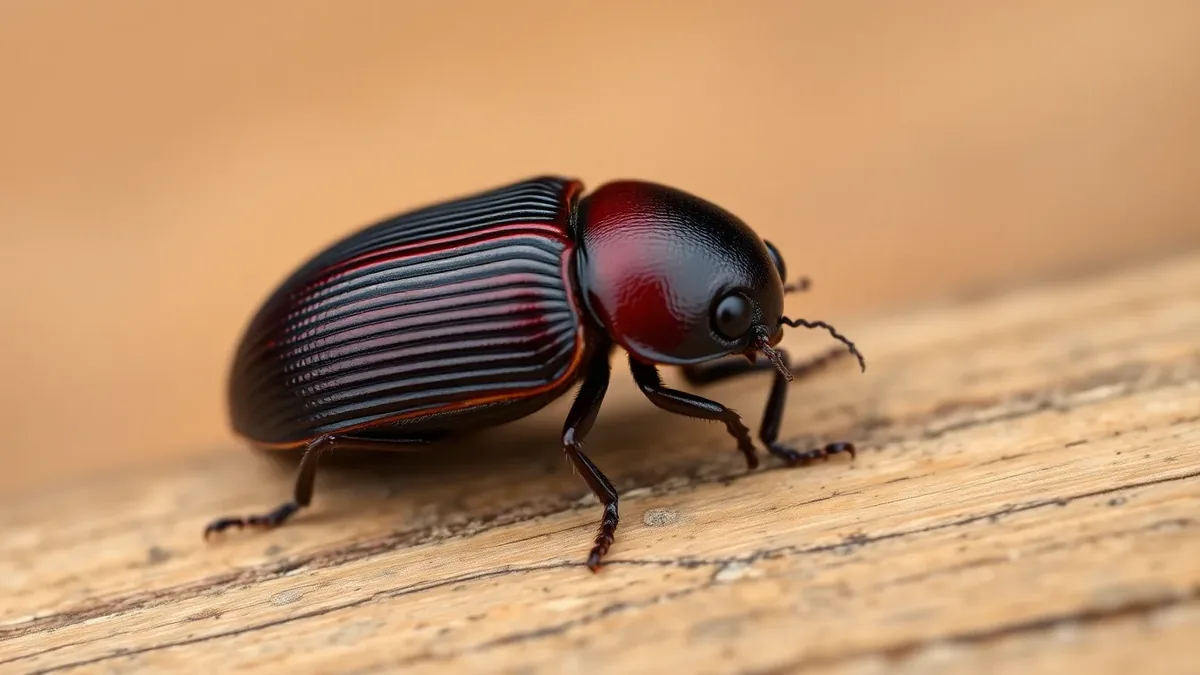
What it looks like:
- 2.5–5mm long
- Dark reddish-brown to dark brown
- Oval, slightly cylindrical body
- Distinctive rounded hood (pronotum) covering the head — visible from above
- Ribbed, textured wing cases (elytra)
- Often found on windowsills during May–August, attracted to light
The damage:
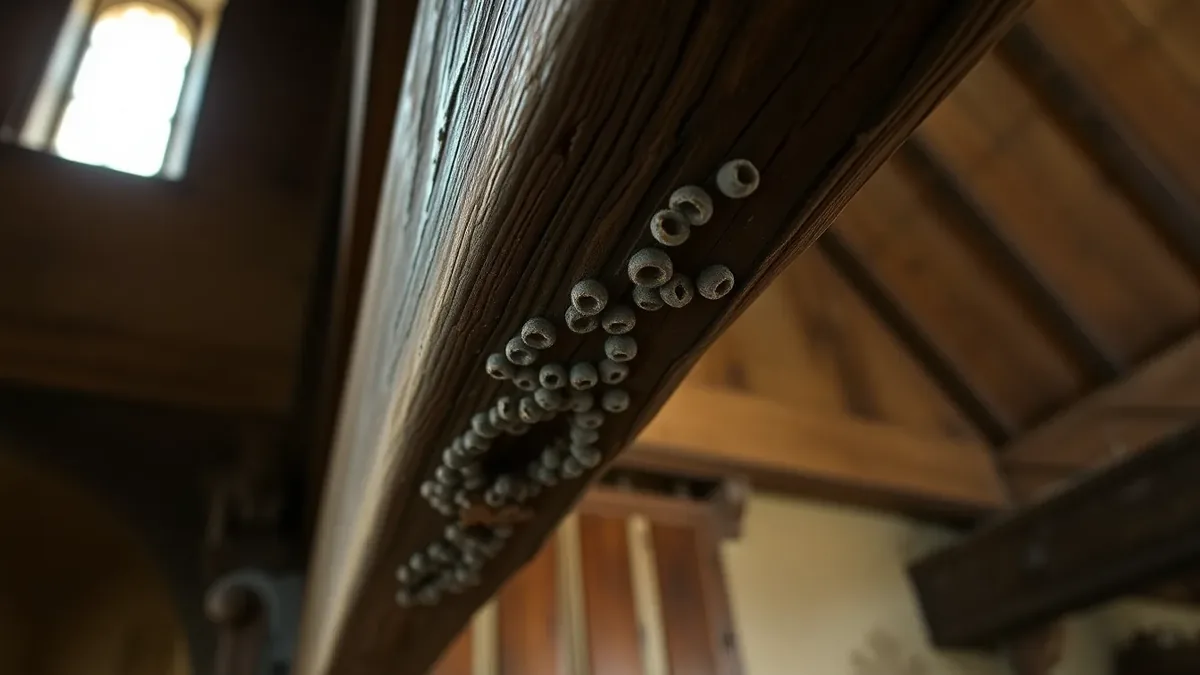
- Exit holes: 1–2mm round, clean edges
- Timber attacked: Softwood (pine, spruce) and older hardwood with high starch content
- Frass: Fine, powdery, cream-coloured, feels gritty
Risk level: Moderate. Cosmetically damaging and structurally significant if allowed to persist over multiple generations. Floor joists, rafters and original skirtings in period properties are the typical sites.
Treatment: Standard water-based permethrin spray treatment. Most cases are straightforward.
Deathwatch beetle (Xestobium rufovillosum)
Named for the soft ticking sound made by adults knocking their heads on timber — once heard in the quiet of old buildings and associated with death vigils.
What it looks like:
- 5–7mm long
- Greyish-brown with patches of yellowish-white hairs giving a mottled appearance
- More robust body than the furniture beetle
- Produces an audible tick-tick-tick in late spring
The damage:
- Exit holes: 3mm round, often in clusters
- Timber attacked: Hardwood only — old oak, elm, chestnut and other structural hardwoods. Particularly associated with roof and floor timbers in churches, historic buildings and older farmhouses
- Requires high moisture content (above 14%) to sustain an infestation
Risk level: High. Deathwatch beetle causes slow, progressive structural damage to irreplaceable hardwood beams. By the time exit holes are visible, internal galleries may extend throughout the beam. This beetle requires specialist assessment.
Treatment: Deep boron paste or gel treatment, sometimes combined with structural repair or replacement for seriously compromised beams.

House longhorn beetle (Hylotrupes bajulus)
Rare in most of the UK but subject to specific building regulations in parts of Surrey and surrounding areas where it has established.
What it looks like:
- 8–20mm long — significantly larger than the other species
- Grey-black with greyish-white patches of fine hairs
- Long antennae — roughly half the body length
- Flat, broad head
The damage:
- Exit holes: 6–10mm, distinctly oval rather than round
- Timber attacked: Softwood only — pine and spruce roof timbers are almost the exclusive target in the UK
- Can cause catastrophic internal damage while leaving the outer surface almost intact. Rafters may look sound from below while internally hollowed
Risk level: Very high. House longhorn beetle causes serious structural damage to roof timbers and is subject to a statutory eradication programme in affected Surrey postcodes. Any suspected longhorn beetle infestation requires immediate specialist assessment.
Treatment: Specialist whole-roof fumigation or targeted treatment; structural timber repair or replacement where required.
Powderpost beetle (Lyctus brunneus)
The powderpost beetle targets a different timber type to the others and is often encountered in newer flooring and recently imported timber.
What it looks like:
- 2–7mm long
- Reddish-brown, flat, elongated body
- More slender than the furniture beetle
The damage:
- Exit holes: 1–2mm round, similar to furniture beetle
- Timber attacked: Hardwood sapwood only — particularly oak, ash and imported tropical hardwoods. Will not attack softwood or old, starchy heartwood
- Frass: Very fine, almost talc-like powder. The exit holes collapse into dust when pressed — the origin of the “powderpost” name
Risk level: Moderate. Most infestations are self-limiting because once the sapwood starch is exhausted, the beetle cannot sustain itself. Can cause significant cosmetic and structural damage to expensive hardwood flooring if allowed to run unchecked.
Treatment: Permethrin spray treatment or, for severe infestations, boron paste; addressing any underlying moisture issue.
How to identify which beetle you have
The three most reliable indicators:
1. Exit hole size and shape
| Species | Hole size | Hole shape |
|---|---|---|
| Common furniture beetle | 1–2mm | Round |
| Deathwatch beetle | 3mm | Round |
| House longhorn beetle | 6–10mm | Oval |
| Powderpost beetle | 1–2mm | Round |
2. Timber type
- Softwood (pine, spruce, fir) in floor joists, rafters, skirtings → furniture beetle or longhorn
- Old hardwood (oak, elm) in structural beams, church timbers → deathwatch beetle
- Newer hardwood flooring or furniture → powderpost beetle
3. The adult beetle itself
If you find adult beetles (most likely May–August near exit holes or on windowsills), size and colour are the key identifiers. A 15mm grey-black beetle in your roof is not the same problem as a 3mm brown beetle in your furniture.
When do woodworm beetles emerge?
Adult beetles emerge from timber between May and September — the flight season. This is when you are most likely to see live beetles, find fresh frass beneath holes, or notice new holes that were not there last year. If you find beetles on windowsills or on white paintwork near timber during summer, that is the time to act — a live population is present.
Outside this window, adult beetles are not active above the surface, but the larvae may be feeding inside the timber year-round.
What to do if you find a woodworm beetle
- Don’t panic. Most infestations are common furniture beetle and, if caught early, are straightforward to treat.
- Note the size. A 1–2mm reddish-brown beetle is furniture beetle. Anything significantly larger warrants urgent specialist assessment.
- Check the timber type. Softwood in floor joists and rafters; hardwood in old structural beams; new hardwood flooring — these point to different species and different urgency levels.
- Get a survey. A free woodworm survey confirms the species, assesses whether the infestation is active, and gives you a clear picture of what treatment — if any — is needed.
Read more: What does woodworm look like? · Signs of woodworm · How to treat woodworm