Guides
Woodworm in Skirting Boards: Signs, Treatment & Replacement
How to spot woodworm in skirting boards, whether to treat or replace, and why skirting board infestations sometimes signal a bigger problem in the floor joists beneath.
By The WoodwormTreatmentHQ Team · Updated 3 June 2026
Skirting boards are one of the most overlooked sites of woodworm infestation — and one of the most telling. Original pine skirtings in period properties sit at floor level, often against damp external walls, in exactly the moisture conditions that the common furniture beetle needs. Finding woodworm in a skirting board is often the first visible sign of a wider problem that extends into the floor joists directly below.
Why skirting boards get woodworm
In older UK properties — pre-1950s, particularly Victorian and Edwardian — skirting boards are typically made from solid pine. The timber was cut without the benefit of modern kiln-drying, meaning the sapwood content is high and the starch levels ideal for wood-boring beetle larvae.
Several factors make skirtings particularly vulnerable:
- Floor-level position: Skirting boards sit against the base of walls, where damp from rising moisture and condensation is highest. Even a modest increase in timber moisture content — above 12–14% — provides the conditions furniture beetle needs to thrive
- Unfinished backs: The rear face of a skirting board, fixed directly against the wall, is almost always rough and unfinished. This is the ideal egg-laying surface for adult female beetles
- Proximity to sub-floor voids: In properties with suspended timber ground floors, the skirting board is continuous with the floor joist structure. An infestation in the skirting is often part of the same infestation affecting the joists behind it
Signs of woodworm in skirting boards
The signs are the same as woodworm in any timber, but look for them specifically at floor level:
- Round exit holes (1–2mm): Clustered in the face and top edge of the skirting, often most concentrated near corners and external wall junctions where damp is highest
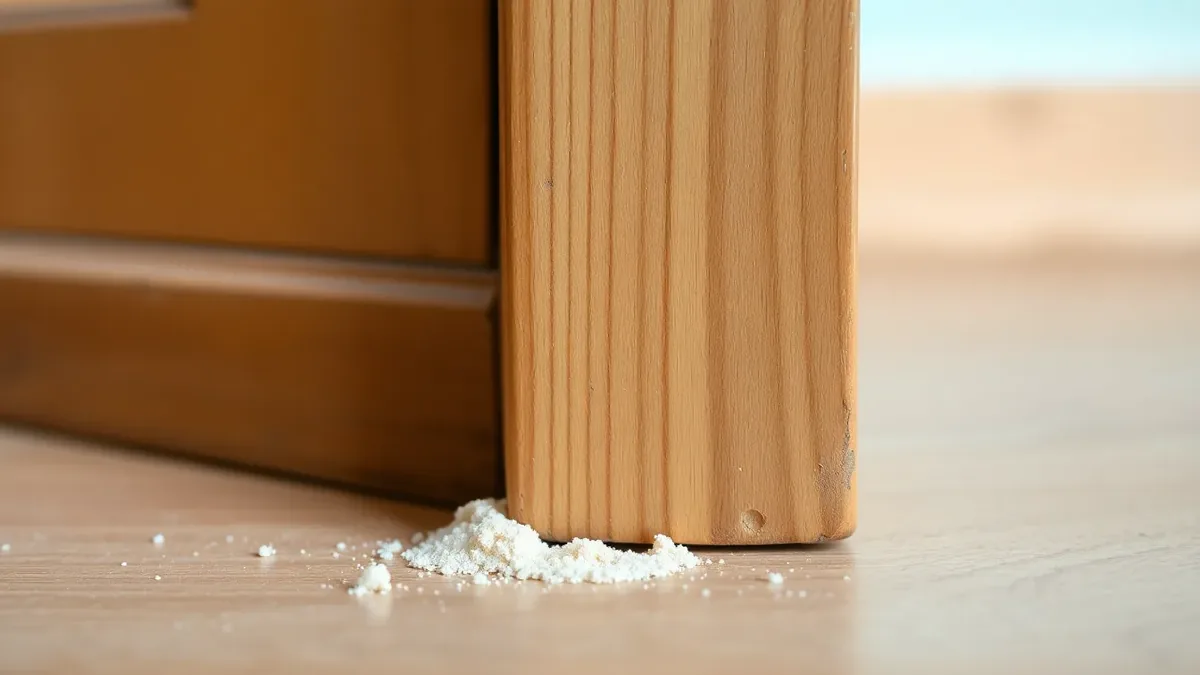
- Bore dust (frass): Pale, powdery dust sitting at the base of the skirting where it meets the floor, or in a line along the floor beneath the skirting
- Surface crumbling: Where infestation is heavy, the surface of the skirting softens and crumbles when pressed
- Soft feel: Press the skirting firmly with your thumb. Sound pine skirting board is rigid; heavily infested board gives slightly or feels spongy
The most important question when you find holes in skirting boards is not just whether the skirting is affected — it is whether the infestation has extended into the floor joists.

Is the infestation in the floor joists?
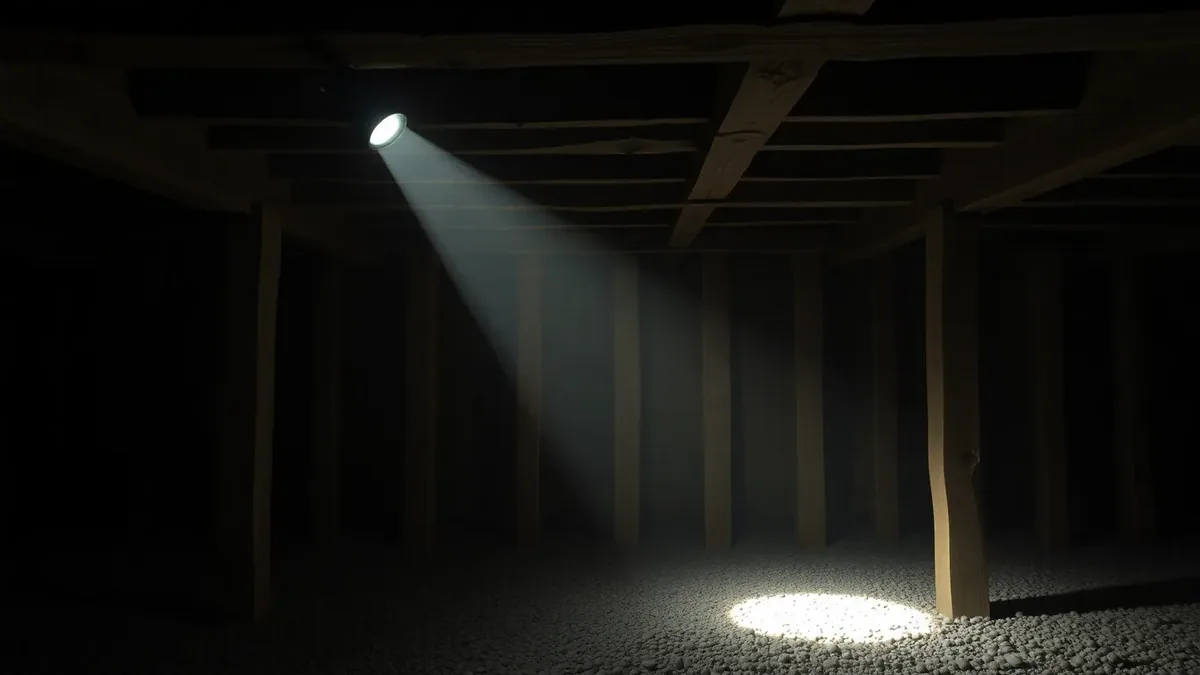
When skirting boards show active woodworm, the floor joists behind and beneath should be inspected. The same conditions — damp, unfinished softwood, limited ventilation — affect both. Access is usually possible through:
- A lifted floorboard in the same room
- An inspection hatch in the floor
- The sub-floor crawl space (if accessible from outside or a utility room)
Look for exit holes in the joists and cross-timbers, frass on the joist surfaces and soil below, and soft areas when probed. Joists showing significant infestation alongside skirting boards often indicate a long-running damp and ventilation problem that needs addressing alongside treatment.
Treating woodworm in skirting boards
Option 1: Treat in place
If the skirting boards are original features worth preserving — or where replacement is expensive and impractical — professional permethrin spray treatment can be applied to all accessible surfaces:
- Face and top edge of the skirting
- Skirting temporarily removed to treat the back face and wall surface behind
- Treatment also applied to floor joists and sub-floor timbers if access is available
Treatment is most effective in late spring before adult beetles emerge. A second treatment the following season confirms eradication.
Option 2: Replace
Where skirting boards are:
- Structurally compromised (crumbling, soft throughout)
- Already damaged and not original features
- Part of a wider renovation
Replacement may be more practical than treatment. New skirting boards should be kiln-dried timber — the kiln-drying process kills any existing larvae and reduces the starch content that attracts egg-laying adults. Pre-treat new boards with permethrin spray before fitting as a preventive measure.
Can woodworm spread from skirting boards to floor joists?
Yes — and this is the key concern. Adult beetles emerging from skirting boards during the flight season (May–September) can fly to nearby surfaces and lay eggs in floor joists and sub-floor timbers. The reverse is also true: beetles emerging from sub-floor timbers can colonise skirtings.
Where skirting boards and floor joists share the same damp conditions, treating one without the other leaves the infestation intact. A whole-room or whole-floor approach — treating skirting boards, exposed joists and the underside of floorboards in a single operation — is far more effective.
When to call a professional
Call a specialist if:
- You find woodworm in skirting boards in a Victorian or Edwardian property with suspended timber floors — a survey of the sub-floor space is strongly advisable
- Skirting boards feel soft or crumble when pressed — structural assessment needed
- You cannot determine whether the infestation is active or historic
- The property is being bought or sold — a treatment certificate may be required by a mortgage lender
A free woodworm survey will inspect skirtings, sub-floor timbers and any other accessible timber in a single visit — identifying the full extent of the problem before any treatment is planned.
Read more: Woodworm in floorboards · How to treat woodworm · Signs of woodworm