Skip to content
WoodwormTreatmentHQ

Guides

Woodworm in Floorboards: Signs, Treatment & Cost

Spotting woodworm in floorboards and joists, how it is treated, what it costs, and when boards need replacing rather than treating.

By The WoodwormTreatmentHQ Team · Updated 22 April 2026

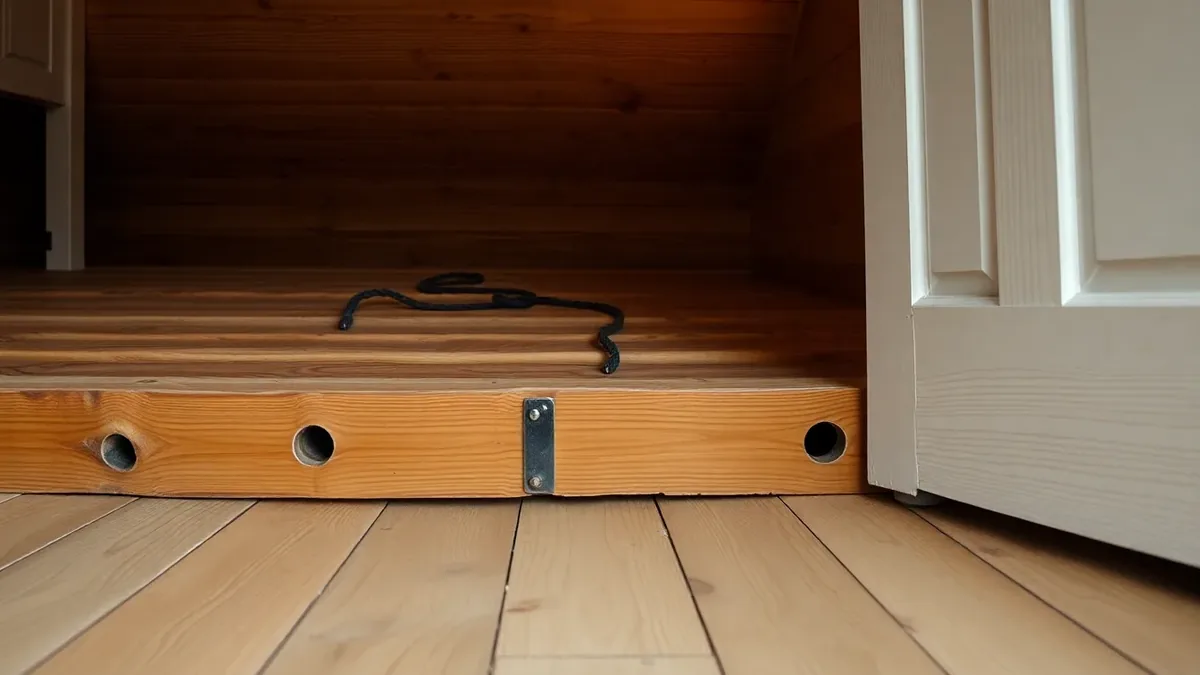
Suspended timber floorboards lifted to reveal joists below, with small woodworm exit holes visible in the floor timber

Suspended timber floors are one of the most common places to find woodworm in a British home, and one of the most easily missed. The boards you walk on every day, and the joists hidden beneath them, are usually softwood — exactly the sapwood-rich timber the common furniture beetle prefers. Add a cool, poorly ventilated under-floor void and slightly raised moisture, and you have ideal conditions for an infestation to tick along quietly for years. This guide explains how to spot woodworm in floorboards and joists, how it is treated, what it costs, and the question everyone asks: when do boards actually need replacing?

Why floorboards and joists are a classic target

The timber under a typical Victorian, Edwardian or interwar floor sits in an environment woodworm likes. The sub-floor void is cool and dim. Air bricks and ventilation are often blocked by decades of debris, raised paths or modern extensions. Moisture from the ground keeps the timber’s moisture content higher than the dry boards above. The result is softwood joists, and the sapwood edges of floorboards, slowly working towards the moisture level the common furniture beetle (Anobium punctatum) needs to thrive.

Because the underside of a floor is rarely seen, an infestation can run through three or four generations of beetle before anyone notices a hole on the visible surface.

Signs of woodworm in floorboards and joists

Look — and listen — for these signs, both on the top surface of the boards and, where you can get to it, underneath.

  • Round exit holes. Crisp, round holes around 1 to 2mm across for the common furniture beetle. Sharp, pale-edged holes suggest recent, active emergence; dark, dirty holes are often old.
  • Frass (bore dust). Fine, gritty, biscuit-coloured powder in small piles on the boards, in the gaps between them, or sitting on top of joists below. Fresh frass that reappears after you clean it away is the clearest sign the infestation is active.
  • Tunnelling and weak edges. Boards that flex more than they should, edges that crumble, or tongue-and-groove joints that have gone soft and powdery.
  • A hollow or soft sound. Tap suspect boards and joists. Heavily tunnelled timber can sound dull, hollow or papery.
  • Live or dead beetles. Small reddish-brown beetles near windows or skirtings between May and August, or dead ones caught in cobwebs in the sub-floor void.
  • Damaged joist ends. Where joists are built into external or party walls, the ends sit in the dampest, least-ventilated spot. Soft, holed or weakened joist ends are common and structurally important.

If you want a fuller walk-through of every sign and how to tell active from historic, our complete guide on how to treat woodworm covers it step by step.

How to inspect your floor

You can do a useful first check yourself. Lift a board or two near a wall or in a corner — these are the lowest, dampest, most vulnerable spots. Use a torch to look along the joists and the undersides of adjacent boards. Run a screwdriver gently into any soft-looking timber: if it sinks in easily, the wood is compromised. Check whether the air bricks around the outside of the property are clear, because blocked ventilation is one of the root causes you will need to fix.

What you cannot do from the top is judge how far damage has spread through a joist, or identify the species with certainty — and both decide the right treatment. A surveyor will lift more boards, examine joist ends, take moisture readings and tell you whether the problem is active and how serious it is.

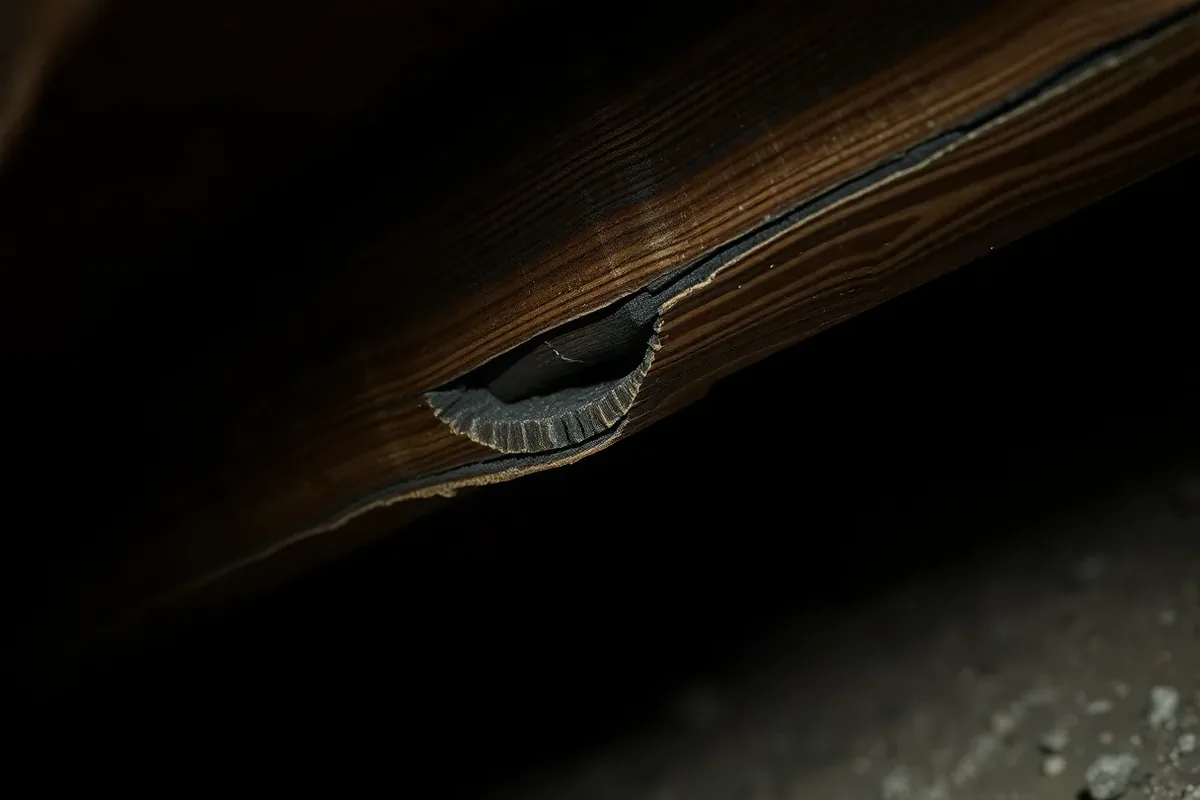
A surveyor using a torch and screwdriver to inspect floor joists in a sub-floor void for woodworm damage and frass

Treating woodworm in floorboards

For an active infestation in sound or only mildly damaged timber, treatment is straightforward and rarely means tearing the whole floor up.

  • Water-based insecticidal spray. With the boards lifted (or access from a cellar), the joists and the underside and edges of the boards are treated with a water-based permethrin spray. This kills emerging adults and surface larvae and breaks the breeding cycle. It is the standard professional approach for accessible floor timber — see our insecticidal spray treatment page for how it is done and the coverage that matters.
  • Boron paste to joist ends. The vulnerable, often-damp joist ends bedded into walls are best treated with a deep-penetrating boron paste, which migrates through the timber to reach larvae a surface spray cannot.
  • Fix the cause. Treatment without ventilation is half a job. Clearing air bricks, improving sub-floor airflow and dealing with any damp source is what stops the floor re-infesting.

Treated timber is typically touch-dry within a few hours, and most floors are treated in a single day.

When floorboards need replacing instead

This is the key judgement, and it comes down to structural integrity, not the number of holes.

  • Surface holes, sound timber → treat, don’t replace. A board peppered with exit holes but still strong and stiff usually only needs treating. The holes are cosmetic history.
  • Crumbling, springy or load-failing timber → repair or replace. Where tunnelling has hollowed a board or joist so it flexes underfoot, has lost its strength, or you can push a screwdriver straight through it, treatment alone is not enough. The affected timber needs to be cut out and replaced, or strengthened.
  • Failed joist ends → structural repair. Rotten, beetle-eaten joist ends are a structural matter. They may be cut back and spliced to sound timber, supported on new bearings, or fitted with resin or steel repairs.

Replacement and strengthening of load-bearing floor timber is exactly the work covered by our structural timber repair and replacement service. New timber should always be pre-treated, and surrounding sound timber treated, so the repair does not simply become the next meal.

Worth knowing: woodworm in floors and woodworm in the roof often share the same underlying cause — poor ventilation and damp. If you have found it in the floor, it is well worth checking the loft too. Our guide to woodworm in roof timbers explains what to look for up there.

What it costs

Costs vary with the size of the floor, how much can be reached, and how much timber needs more than a spray. As a guide to typical 2026 UK prices:

  • Treating a single room’s floor — commonly in the region of £200 to £600 + VAT, depending on floor area and access.
  • Whole-house floor treatment — part of a wider job, where domestic woodworm treatment generally runs from around £500 to £3,000 depending on the property.
  • Board or joist replacement and structural repair — quoted separately, on top of treatment, according to how much timber is affected and how easy it is to reach.

A few things move the price up or down. Access is the biggest factor: a floor with a usable cellar beneath, or boards that lift easily, is quick to treat, whereas a glued-down or chipboard floor that has to be lifted and reinstated adds labour. The amount of structural repair matters too — spraying sound joists is inexpensive, but cutting out and replacing failed joist ends is skilled carpentry quoted on top. Finally, whether damp needs fixing affects the total, because lasting treatment means putting right the ventilation or moisture problem that caused the infestation in the first place.

Every reputable job should include a free survey, a fixed written quote and, on treated timber, a long guarantee — ours is 30 years, with a treatment certificate that is useful for mortgage surveys and sales. For a full breakdown by room, roof and whole house, see our dedicated woodworm treatment cost guide, and the main woodworm treatment hub explains the whole process from survey to certificate.

Get professional help

If you have found holes, frass or soft boards in your floor, the safe next step is to have it looked at before you decide whether to treat or replace. A free survey confirms whether the woodworm is active, identifies the species and tells you exactly which boards and joists need what — with no obligation. Get a free quote and we will assess your floor and give you a fixed written price.

Get rid of woodworm — for good

Book a free survey today. Fixed written quote, BPCA-trained technicians and a 30-year guarantee on treated timber.

0121 271 0061 No call centres · Speak to a surveyor

Request your free survey

Two details to get started.

Free survey · No obligation · 30-year guarantee