Guides
Woodworm in Roof Timbers: What to Do
How to check loft rafters and roof joists for woodworm, why roof timber is high-risk, how treatment and repair work, and the rules on bats in lofts.
By The WoodwormTreatmentHQ Team · Updated 6 May 2026
The loft is where woodworm does its quiet damage. Roof timbers are softwood, often original to the house, frequently exposed to condensation, and almost never inspected. For most homeowners the roof space is a place for the Christmas decorations, not a place they look at twice — which is exactly why an infestation in the rafters can run for years before anyone notices. This guide explains how to check loft rafters and joists for woodworm, why roof timber is genuinely high-risk, how treatment and repair work, and the one thing you must check before any treatment goes ahead: bats.
Why roof timber is high-risk
Several things combine to make a loft an attractive home for the common furniture beetle (Anobium punctatum) and, in older properties, the death watch beetle.
- It is softwood. Modern and Victorian roofs alike are built largely in softwood, rich in the sapwood that woodworm larvae feed on.
- Condensation and damp. Warm, moist air rising from the house meets cold roof timber and condenses. Poor loft ventilation, blocked eaves and the occasional slipped slate or leaking flashing all push timber moisture up to the level beetles need.
- It is structural. Rafters, purlins, ceiling joists and wall plates hold the roof up and the ceilings below in place. Damage here is never purely cosmetic.
- Nobody looks. An infestation in the floor eventually shows itself on a surface you walk on. In the roof it can quietly weaken rafters for a decade unseen.
Because the timber is load-bearing, woodworm in the roof is one situation where acting promptly genuinely matters. Our guide on whether woodworm is dangerous explains how structural weakening develops and when it becomes a safety issue.
How to check your loft for woodworm
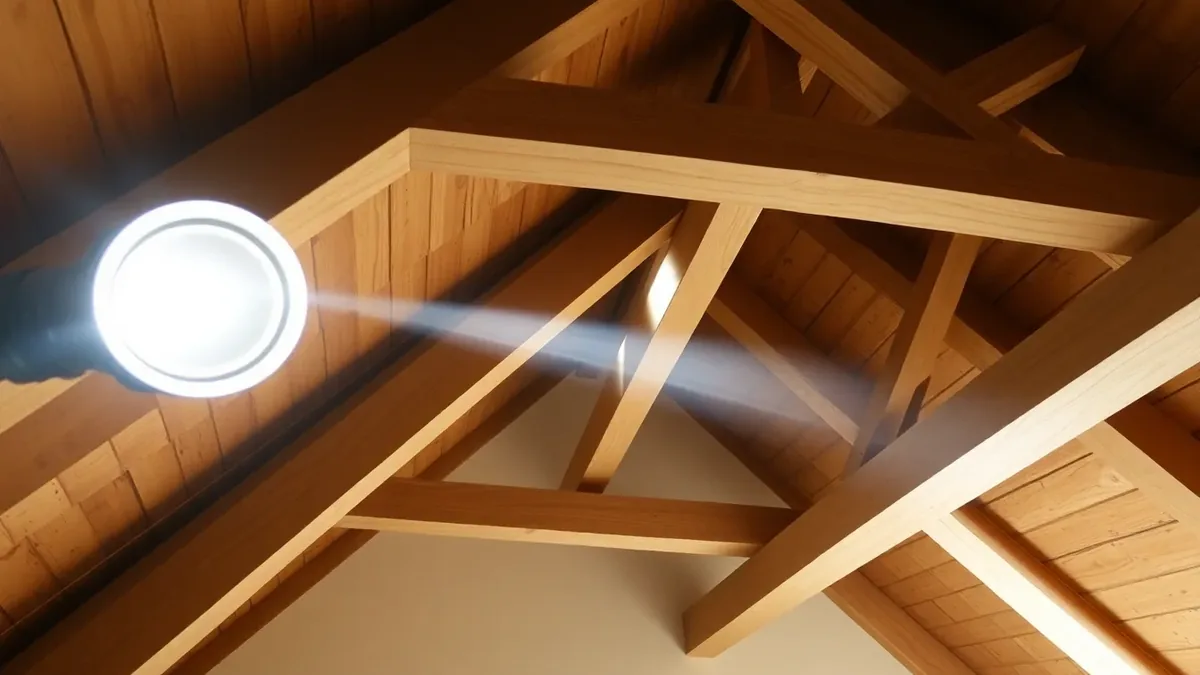
You can carry out a useful first inspection yourself with a torch, a screwdriver and some care on the joists underfoot.
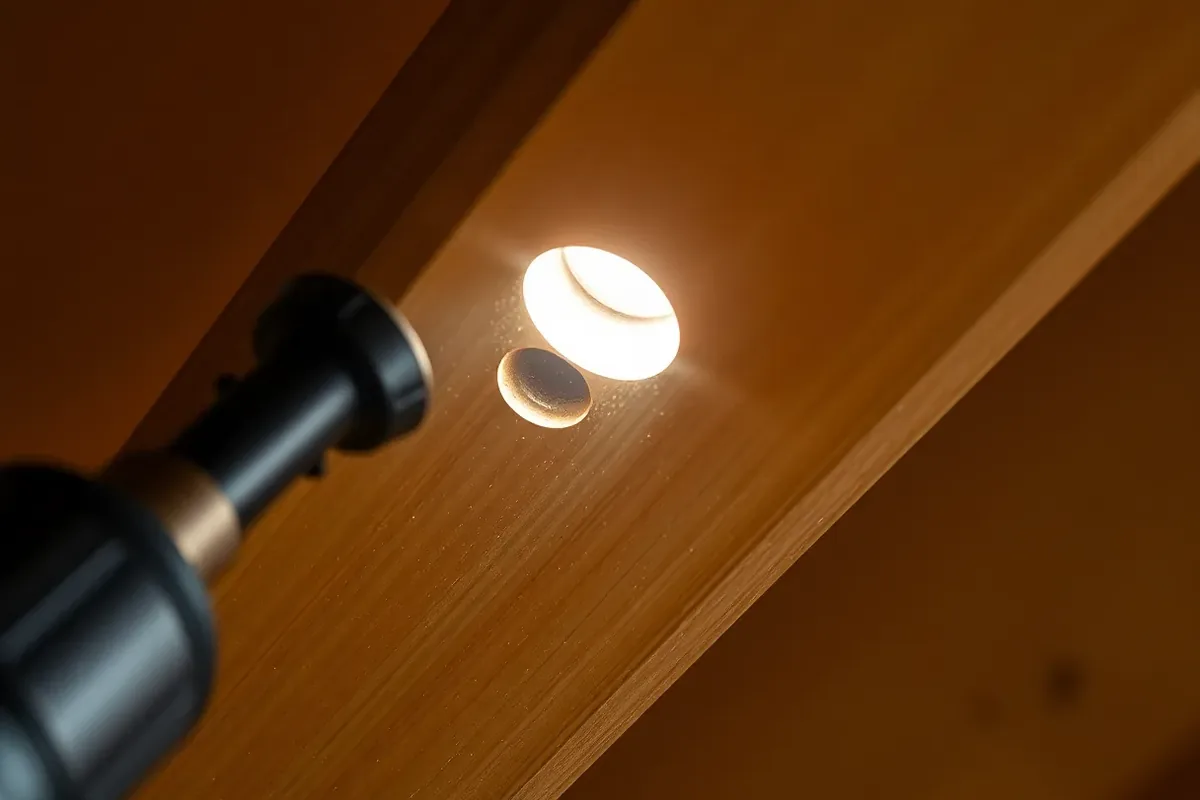
- Round exit holes. Look for crisp, round holes — 1 to 2mm for the common furniture beetle, about 3mm for the death watch beetle, which favours old oak and historic roofs. Pale, sharp-edged holes suggest recent activity.
- Frass. Run your hand or a torch along the tops of joists, wall plates and purlins. Fine, gritty bore dust sitting on timber or on the insulation below is a strong sign, especially if it reappears after you wipe it away.
- Soft or weak timber. Press a screwdriver into rafters and joist edges. Timber that gives way easily, crumbles, or sounds hollow when tapped has been tunnelled internally.
- Wall plates and rafter feet. The wall plate — where the rafters sit on top of the walls — and the rafter feet in the damp eaves are classic trouble spots. Check them carefully.
- Beetles. Small reddish-brown beetles near the loft hatch or roof light between May and August, or dead ones in cobwebs.
Stay on the joists, never the plasterboard between them, and take care with old wiring and low purlins. What you cannot judge from a quick look is how deep the damage runs or whether it is active — and in a roof, where the timber is structural, that judgement is exactly where a professional survey earns its place.

Bats: check before you treat
This is the most important part of this entire guide, so do not skip it. Bats are legally protected in the UK, and many species roost in roof spaces. It is a criminal offence to disturb, harm or destroy a bat roost, or to use timber treatment chemicals where bats are present, even if you do not see the bats themselves.
Before any insecticidal treatment is carried out in a loft, the roof should be checked for signs of bats — droppings, staining, or the bats themselves, usually tucked into ridge gaps, behind tile battens or in the apex. If there is any sign of a roost, treatment must stop and you must take advice; a bat survey and, in some cases, a licence may be required, and bat-safe treatment products and timing may be needed.
This is not optional, and it is one of the clearest reasons to use a professional who understands the rules rather than spraying a loft yourself. Read the official guidance on bats, protection, surveys and licences on GOV.UK before you do anything in a roof you suspect bats may use. A reputable surveyor will always raise this with you as a matter of course.
Treating woodworm in roof timbers
Once any bat question is properly dealt with and the species and activity are confirmed, treatment of a roof is usually well within reach.
- Water-based insecticidal spray. Accessible rafters, joists, purlins and wall plates are treated with a water-based permethrin spray, killing emerging adults and surface larvae and breaking the breeding cycle. This is the standard professional treatment for a loft — our insecticidal spray treatment page sets out how it is applied and why thorough, even coverage of every face of the timber matters so much in a roof.
- Boron paste for vulnerable ends. Damp-prone rafter feet, wall plates and beam ends benefit from a boron paste that penetrates deeper than a surface spray.
- Fix the conditions. Improving loft ventilation, clearing blocked eaves and fixing any roof leak removes the damp that let the beetles thrive — without it, timber stays at risk.
Water-based treatment is touch-dry within a few hours, and a typical loft is treated in a day. You should always be given a written treatment certificate and, on our work, a 30-year guarantee — valuable for surveys and sales.
What roof treatment typically costs
Treating a roof space is one of the more accessible jobs because the timber is usually open and easy to reach once you are in the loft. As a guide to typical 2026 UK prices, treating a roof space commonly starts from around £400 + VAT, rising with the size and complexity of the roof, how much insulation has to be cleared, and whether vulnerable rafter feet and wall plates need boron paste as well as a spray. Where treatment forms part of a wider job, whole-house woodworm treatment generally runs from around £500 to £3,000 depending on the property. Any structural repair to rafters, purlins or wall plates is quoted separately, on top of treatment, according to how much timber is affected and how easy it is to reach. A reputable quote is always fixed, in writing, and follows a free survey.
When roof timber needs repair or replacement
As with floors, the deciding factor is whether the timber has lost its structural strength.
- Holes but sound timber → treat. A rafter peppered with old exit holes but still strong only needs treating.
- Weak, crumbling or load-failing timber → repair or replace. Where tunnelling has hollowed a rafter, purlin or joist so it has lost strength, the affected length is spliced to sound timber, strengthened, or replaced. Rotten, beetle-eaten rafter feet and wall plates are a common structural repair.
That structural work is covered in detail in our service on timber repair, and the principle is the same as a floor — the same root causes, and the same need to treat new and surrounding timber so the repair lasts. If you have found woodworm in the roof, it is well worth checking the floors too; the underlying damp problem is often shared. Our guide to woodworm in floorboards explains what to look for lower down, and the main woodworm treatment hub walks through the whole process from survey to guarantee.
Get professional help
Roof timber is structural, hard to assess from the ground, and legally sensitive where bats are involved — three good reasons not to leave it to guesswork. A free survey confirms whether the woodworm is active, identifies the species, checks for protected species and tells you exactly which timbers need treating or repairing, with no obligation. Get a free quote and we will inspect your loft properly and give you a fixed written price.