Skip to content
WoodwormTreatmentHQ

Identification

Woodworm Larvae: What They Look Like, Size & How to Find Them

Woodworm larvae are where all the damage happens. Find out what they look like, how big they are by species, and how to tell if they are still active in your timber.

By The WoodwormTreatmentHQ Team · Updated 3 June 2026

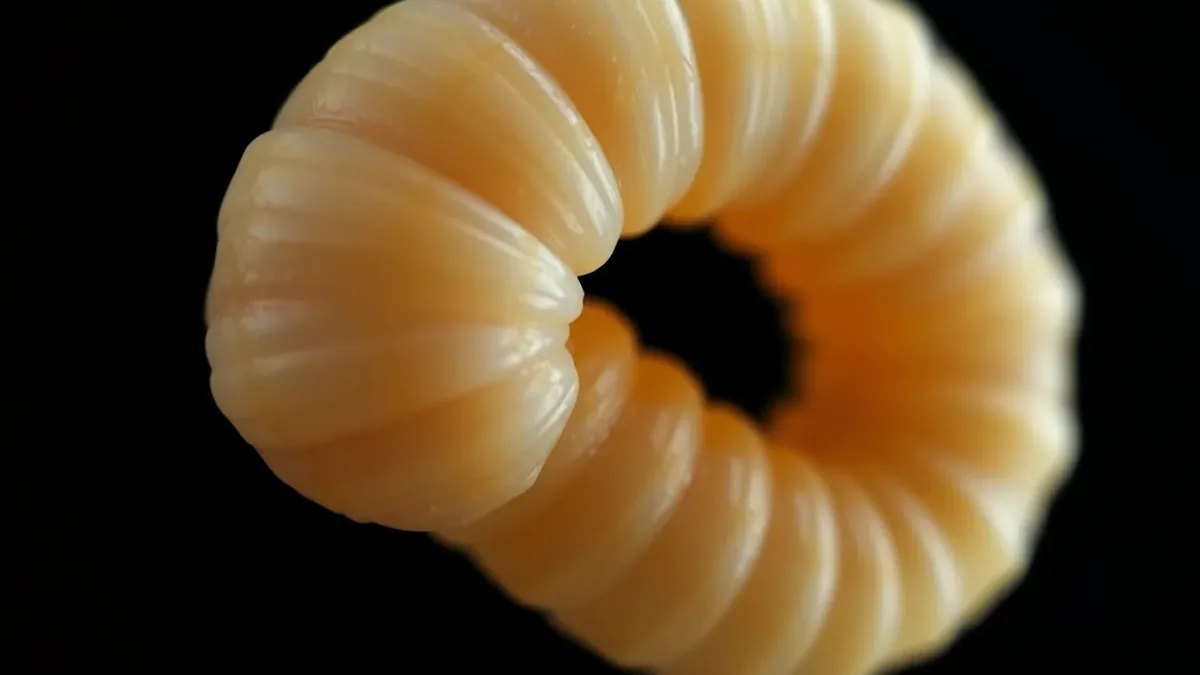
Macro close-up of a cream-white C-shaped woodworm larva extracted from a pine floorboard, shown against a dark background

If you have found a small, cream-white grub inside a piece of timber, a piece of furniture or a floorboard you were lifting, you are almost certainly looking at a woodworm larva. This is the stage of the wood-boring beetle life cycle that causes all the structural damage — and identifying it correctly tells you which species you are dealing with and how urgently to act.

What do woodworm larvae look like?

The woodworm larva has a distinctive appearance that is consistent across most UK species:

  • Colour: Cream-white to pale yellow — almost translucent in young larvae
  • Shape: Strongly C-shaped (curved), broadening slightly towards the middle
  • Texture: Soft, segmented body with no visible hard shell
  • Legs: Tiny, vestigial — effectively invisible without a loupe
  • Head: Small, amber to brown-coloured head capsule at one end

If you slice into an infested piece of timber and see these grubs in the tunnels, or find one exposed when a board is broken, that is a woodworm larva. Finding a live larva is definitive proof of an active infestation.

Woodworm larva size by species

Larva size at full development is one of the most reliable species identifiers — though early-stage larvae of all species start very small:

SpeciesLarva length (mature)Notes
Common furniture beetle4–6mmC-shaped, cream-white, fine hairs
Deathwatch beetle8–11mmLarger, broader, cream-white
House longhorn beetleUp to 30mmCream-white, slightly flattened
Powderpost beetle3–6mmSlender, similar to furniture beetle

Finding a larva larger than 10mm in structural hardwood suggests deathwatch beetle — a more serious find requiring specialist assessment. A larva approaching 30mm in a roof timber is almost certainly house longhorn beetle and is an emergency.

Where woodworm larvae live

Larvae burrow immediately into timber after hatching and remain inside for the duration of their development — three to five years for common furniture beetle, up to ten years for deathwatch beetle. They are never seen on the surface during this phase.

Their preferred conditions:

  • Sapwood: Larvae preferentially attack the outer sapwood layers, which are richer in starch and more accessible than the denser heartwood
  • Moisture content 12–18%: Below this range, timber is too dry; above it, fungal decay tends to dominate. The furniture beetle thrives in the moisture range typical of unheated British attics and sub-floor voids
  • Unfinished, rough surfaces: Finished or painted timber is attacked less often, because egg-laying requires a rough surface grip

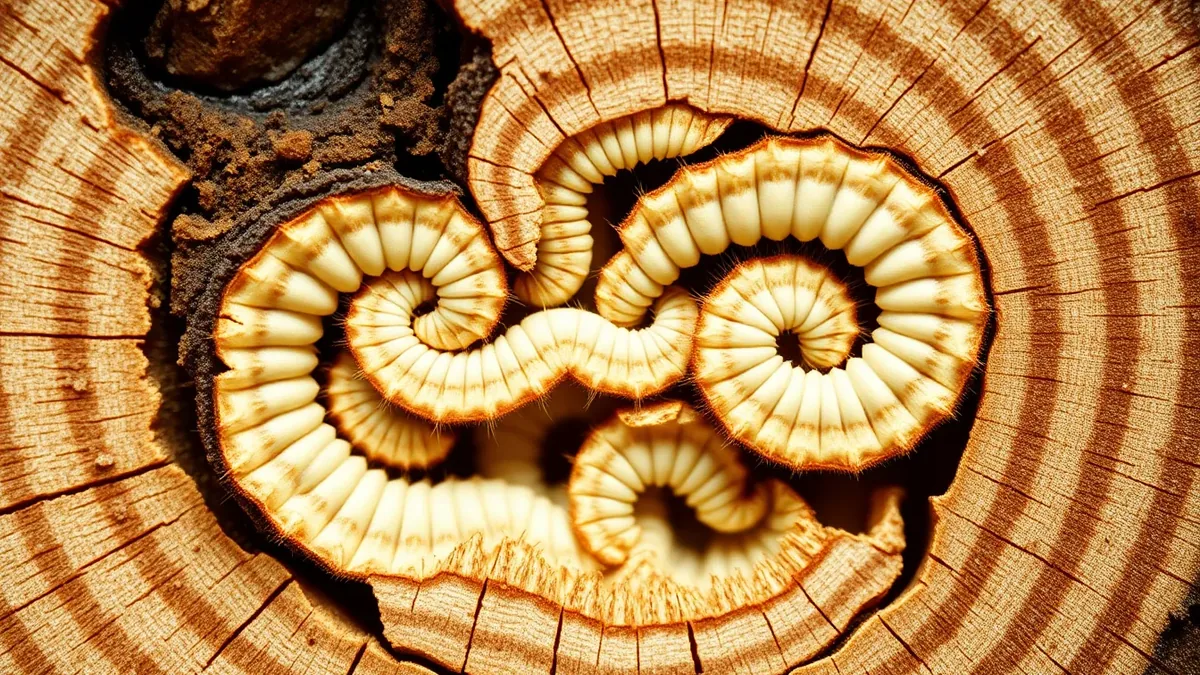
The tunnels left by larvae follow the grain of the timber — a branching network of passages packed with bore dust (frass) that represents years of feeding.

Close-up of a cross-section through infested pine showing the winding larval tunnels filled with pale frass, cutting across the grain

What do woodworm larvae eat?

Larvae feed on the cellulose and starch in wood. They digest the starch with the help of symbiotic microorganisms in their gut, extracting nutrition from what seems like an almost indigestible material.

  • Common furniture beetle: Starch-rich softwood and old hardwood sapwood
  • Deathwatch beetle: Old hardwood (oak, elm, chestnut) — particularly where moisture has pre-softened the timber
  • Powderpost beetle: Exclusively the starch-rich sapwood of hardwoods like oak, ash and tropical species

This is why powderpost beetle infestations are often self-limiting — once the sapwood starch is consumed, the population cannot sustain itself.

How long do woodworm larvae live?

The larval stage is by far the longest phase of the woodworm life cycle:

  • Common furniture beetle: 3–5 years
  • Deathwatch beetle: 4–10 years
  • House longhorn beetle: 3–11 years (in UK conditions, typically 3–6)
  • Powderpost beetle: 6 months–3 years

During this entire period, the larvae are invisible and working. The exit holes you find represent the end of cycles that began years earlier — which is why woodworm damage can seem to appear suddenly even though the infestation has been building for a long time.

How to tell if woodworm larvae are still active

Because larvae are always hidden inside timber, you assess active/historic status indirectly:

1. Fresh frass Brush away any visible bore dust from exit holes or surfaces. Return in two to four weeks. Fresh, pale, powdery frass that has reappeared indicates active larvae below.

2. Soft or spongy timber Press a sharp probe or bradawl into the timber surface near exit holes. Active larvae reduce timber to a matrix of tunnels and frass — the probe sinks in more easily than into sound wood.

3. Flight season beetles During May to September, finding adult beetles emerging from the timber, or seeing fresh exit holes that were not there before, confirms an active larval population below.

4. Specialist survey A qualified surveyor uses moisture meters, probes and visual inspection to assess whether larvae are still active — and can identify the species from exit hole dimensions and frass characteristics without needing to find a larva directly.

Can you treat woodworm larvae directly?

Not quite — but professional treatments are designed to reach them. Permethrin-based spray treatments penetrate the outer layers of timber and are absorbed as the larva moves toward the surface in its pupal chamber, and as the newly-emerged adult chews through the surface. Boron paste and gel formulations penetrate more deeply and are used for structural timber, joist ends and areas where spray access is limited.

Treatment is most effective in spring, when pupae are forming just below the surface. Larvae deeper in the timber are reached over successive seasons as the insecticide persists in the wood.

If you have found a live larva or suspect active woodworm, a free survey will confirm the species and tell you exactly what treatment — if any — is needed.

Read more: Woodworm life cycle · What does woodworm look like? · Signs of woodworm

Get rid of woodworm — for good

Book a free survey today. Fixed written quote, BPCA-trained technicians and a 30-year guarantee on treated timber.

0121 271 0061 No call centres · Speak to a surveyor

Request your free survey

Two details to get started.

Free survey · No obligation · 30-year guarantee