Woodworm vs Dry Rot: How to Tell the Difference
Woodworm and dry rot both damage timber, but they are different problems with different causes and fixes. Learn how to tell them apart and what to do next.
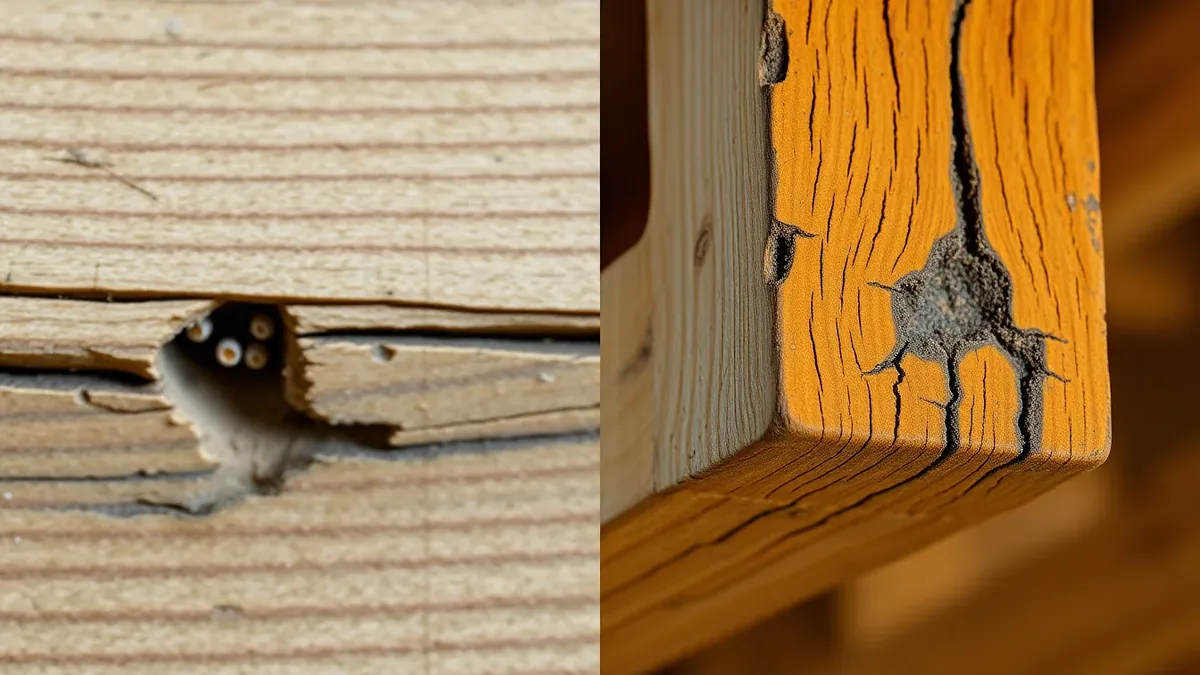
Woodworm and dry rot both damage timber, and they often appear together. They are different problems, however, with different causes and fixes. This guide shows how to tell them apart and what to do about each.
The short answer
Woodworm is an insect. The larvae of a beetle tunnel through the wood, so they leave round holes and dust. Dry rot is a fungus. It breaks down the wood from inside and leaves it dry, cracked and brittle.
Both need damp, so finding one is a reason to look for the other.
How woodworm looks
Woodworm leaves small round holes, usually 1 to 2mm wide. It also leaves fine, gritty dust under the holes. The wood around the holes often feels firm, at least at first, although it weakens over time. Our guide to the signs of woodworm lists every clue.
How dry rot looks
Dry rot leaves wood that cracks into cube-like blocks. The wood feels light and dry, and it crumbles in your hand. You may see grey or white strands, a mushroom-like growth and rusty-red spore dust. There is often a musty smell.
Dry rot can spread through brick and plaster, which is why it is serious. It needs specialist care because it keeps growing while damp lasts.
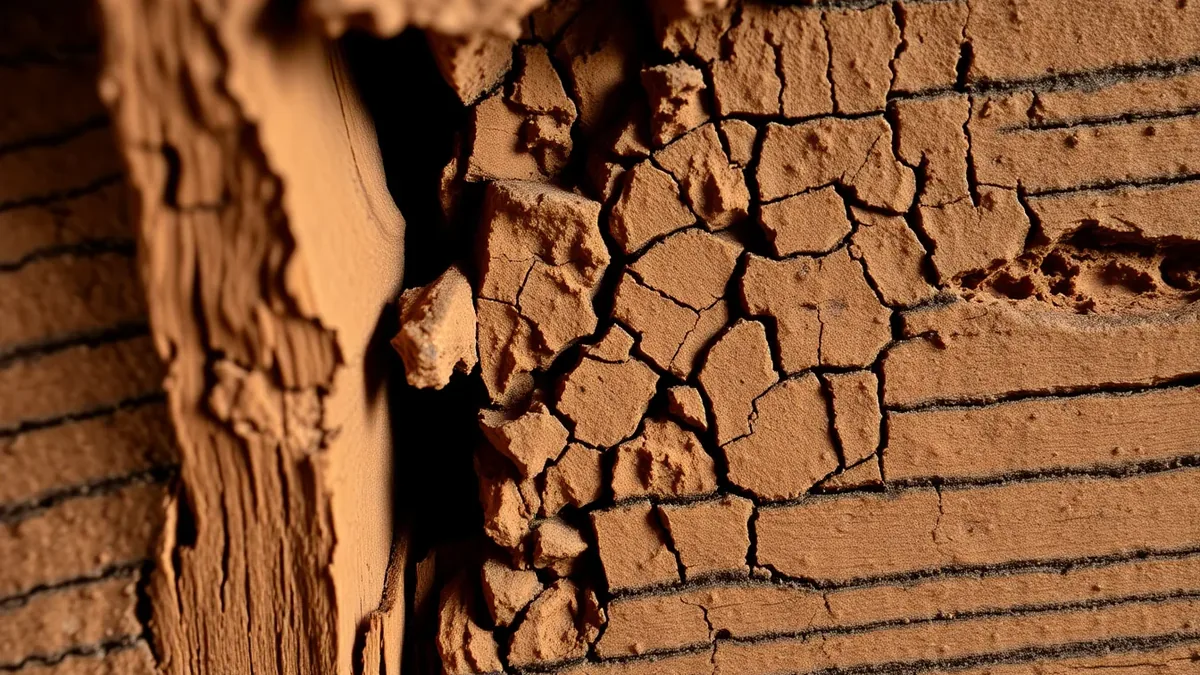
Key differences
| Feature | Woodworm | Dry rot |
|---|---|---|
| Cause | Beetle larvae | Fungus |
| Marks | Round holes and dust | Cracks, strands, spore dust |
| Spread | Slowly, through timber | Through timber and masonry |
| Damp needed | Helps | Essential |
Why they appear together
Both prefer damp wood. A leak that softens timber can feed fungus and invite beetle at the same time. For that reason, a good survey checks for both.
What to do about woodworm
Check whether it is active, name the beetle and choose a method, because the choice depends on the species. Our page on how to treat woodworm explains the steps, and the treatment methods guide compares the options.
What to do about dry rot
Find and fix the water source first. Then a specialist removes decayed wood and treats the sound wood and any affected masonry. The page on dry rot and damp treatment explains the process.
Do not try to cure dry rot with a shop product alone. Without fixing the damp, it will return, since the fungus survives in the wall.
Wet rot is different
Wet rot is another fungus. It needs constant wetness and stays close to the leak. The guide to woodworm versus wet rot explains how it differs.
Get an answer
If you are unsure which problem you have, a survey is the safest step. Request a survey and ask the surveyor to check for beetle, rot and damp.
Where you live matters, because older streets hold more old timber. See our local guides for woodworm treatment in Weston-super-Mare and woodworm treatment in London.
To go deeper, read about the wood-boring weevil and the boron paste treatment, because the right method depends on the beetle.