Woodworm vs Termites: Are They the Same Thing?
Woodworm and termites are often confused but are very different insects. Learn the key differences, why termites are not a UK risk and what you really have.
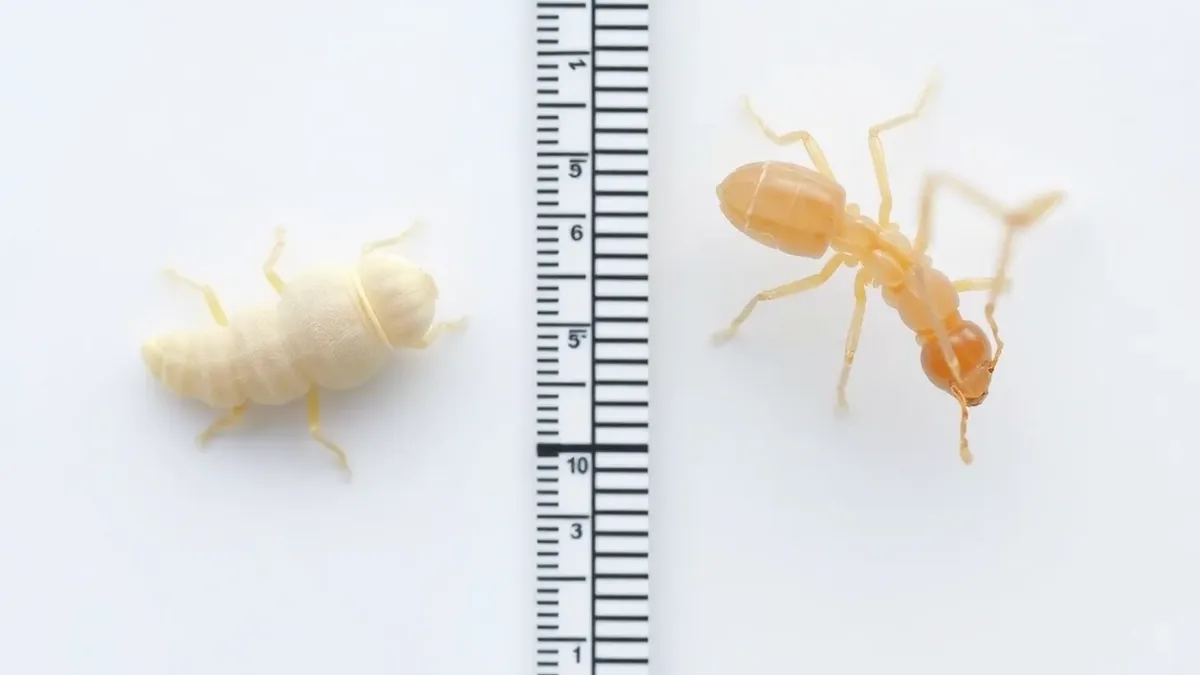
People often mix up woodworm and termites. They are very different insects, and only one of them is a regular problem in UK homes. This guide explains the differences and what you probably have.
The short answer
Woodworm is the larva of a wood-boring beetle. Termites are social insects that live in colonies. Termites are not established in the UK, whereas woodworm is common.
If you see small round holes in wood in a British home, it is almost certainly woodworm, because termites leave a different pattern.
What woodworm is
Woodworm is a grub that lives inside timber. The grub becomes a beetle, which leaves a round hole. Our guide to the woodworm beetle covers the UK species.
The usual culprit is the common furniture beetle. It leaves round holes about 1 to 2mm wide and fine, gritty dust, because the adults chew their way out.
What termites are
Termites live in large colonies and eat wood from inside, while the surface looks normal. They build mud tubes and leave wood that looks thin and layered. Winged termites swarm at certain times.
Termites are a problem in warmer countries. In the UK, isolated colonies have been found and dealt with, yet the insects have not become established.
Key differences
| Feature | Woodworm | Termites |
|---|---|---|
| Type | Beetle larva | Social insect |
| Marks | Round holes, dust | Mud tubes, layered damage |
| Colony | No | Yes |
| UK status | Common | Not established |
Flying ants and beetles
Winged insects in your home are often flying ants, not termites. Ants have a narrow waist and unequal wings. Termites have a thick waist and wings of equal length. Beetles have hard wing cases.
If you are unsure, catch one and compare it with a photo. A pest expert can identify it quickly, since the differences are clear under a lens.
What to do
If you see round holes and dust, check whether the beetle is active. Our guide to active versus historic woodworm shows how. Then read how to treat woodworm for the options.
If you ever see mud tubes or a swarm of winged insects with thick waists, contact a pest professional promptly. They can confirm what you have and advise on the next steps.
Next steps
A survey names the insect and checks the damage. You can request a survey at any time. For a quick comparison of beetles, see the species guide.
Homes differ by city, so local advice helps. Our pages on woodworm treatment in Manchester and woodworm treatment in Birmingham explain the usual problems.
To go deeper, read about the common furniture beetle and the powderpost beetle, because the right method depends on the beetle.